Every day, one story that matters, broken down into three numbered scenarios, each with its own probability. Never fixed — it shifts as the situation changes.
Scénario
Saturday, culture
Digital Art: Could the Original Become the Ultimate Luxury Again?
Is the flawless digitization of art paradoxically fueling a renaissance of the original object, making it more valuable than ever?
Publié le 31 octobre 2026
Share:
The facts
The point, in plain terms
A flawless digital copy of a painting does not destroy its value; instead, it reinforces the desire to see the physical original.
The explosion of digital images on our screens was supposed to make brick-and-mortar museums obsolete. The opposite is happening: institutions like the Louvre are packed, and painting sales are breaking records. When an image is freely accessible everywhere, owning or admiring the singular, physical original becomes an exceptional luxury. This shift is redefining how our society values artistic creation.
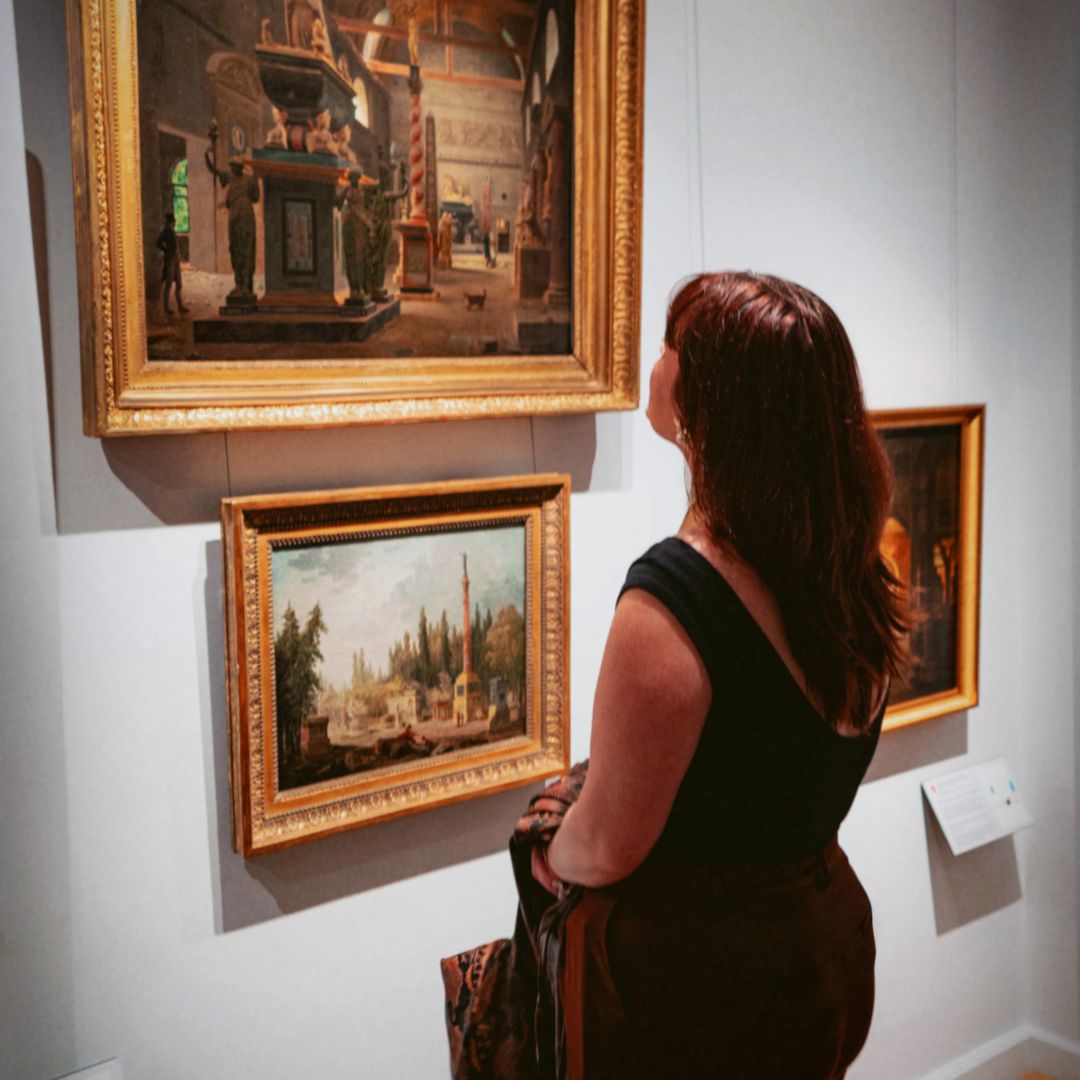
For years, the cultural world believed that screens would replace canvases and sculptures in the public’s heart. Ultra-high-definition virtual tours and the speculative frenzy surrounding digital certificates seemed to herald the demise of the traditional museum. Yet recent evidence points in the opposite direction. In 2025, the Louvre welcomed 9 million visitors, posting higher attendance despite rising ticket prices. With replicas accessible everywhere on our phones at the swipe of a finger, crowds still queue up to experience the physical material, layers of varnish, and minute imperfections that digital media fail to convey.
Understanding it
Why does listening to a track on your phone make you want to attend a live concert?
The music industry offers a telling parallel: any track can be streamed for free in flawless audio quality, yet fans still pay to see artists live in concert. The same logic applies to art: viewing a digital picture on a screen never replaces the physical encounter with paint on canvas.
This return to the physical medium is strikingly evident across the art market. According to the benchmark annual report published by Art Basel and Swiss bank UBS, the global physical art market reached $59.6 billion in 2025, marking a clear 4% rebound after two consecutive years of decline. This recovery was driven by top-tier public auctions, which rose 9% to $20.7 billion. The world’s leading collectors are actively seeking irreplaceable physical pieces to safeguard their wealth amid global economic uncertainty.
The contrast is even starker when looking at what became of the promises made by purely virtual assets. The market for non-fungible tokens*, or NFTs, which claimed to create artificial scarcity online, has literally collapsed. From a record peak of $2.9 billion in 2021, the market plummeted to just $23.8 million in the first quarter of 2025, according to tracking platform DappRadar. Buyers have come to realize that a line of computer code cannot replicate the physical resonance of an authentic painting or sculpture in a room.
Understanding it
The fundamental difference between a digital file and a unique object
A digital file can be duplicated indefinitely without losing quality, making artificial scarcity inherently fragile. Conversely, a hand-painted canvas is an irreplaceable physical object shaped at a specific moment in history, giving it lasting safe-haven value for collectors worldwide.
At the top end of the global market, major auction houses are posting spectacular results that confirm this appetite for landmark physical works. In early 2026, Christie’s hammered down a historic Jackson Pollock painting for a colossal $181 million. Over that same exceptional half-year, Christie’s global sales surged 71% year-on-year to $3.5 billion. Millennial and Gen Z buyers now account for 47% of new clients at these prestigious sales, proving that the attachment to physical objects spans every generation.
This tension between reproduction and original creation echoes philosopher Walter Benjamin’s famous analysis of an artwork’s aura*. A century ago, Benjamin argued that the industrial reproduction of images would destroy the unique, sacred quality of the original. Today, the digital world is producing the exact opposite effect: the more an image circulates freely and multiplies endlessly across social media, the more prestige and symbolic value the original physical piece acquires. Rather than destroying the original painting, flawless copies act as a massive, permanent advertising campaign.
Yet the future of this relationship between physical art and digital technologies remains open to several distinct paths. Three scenarios emerge for the years ahead: an unprecedented surge in the value of unique physical works fueled by screen fatigue, a steady coexistence where each medium retains its audience without major disruption, or a gradual commodification of art caused by the proliferation of flawless computer-generated replicas. Understanding which path will prevail helps gauge the cultural and economic impact of our digital transition.
Louvre Attendance (2025)9 million visitors vs. 8.7 million in 2024
Physical Art Market Value (2025)$59.6 billion +4% vs. 2024
Les chiffres
Le marché de l'art physique a atteint 59 600 millions de dollars en 2025, contre seulement 23,8 millions pour le marché NFT d'art au premier trimestre 2025.
Art physique 2024
57 500 M$
Art physique 2025
59 600 M$
NFT art 2024
197 M$
NFT art Q1 2025
23,8 M$
Art Basel/UBS Global Art Market Report 2025 et DappRadar, 2025
Will Flawless Digital Copies Drive Up the Value of Original Artwork?
What we're assessing
FavorableLa surabondance numérique démultiplie le prestige et la valeur économique des œuvres physiques originales.
StableL'art physique et les créations numériques coexistent sur des marchés séparés sans s'influencer fortement.
DégradéLa prolifération de copies numériques parfaites finit par banaliser les œuvres et réduire l'intérêt pour les originaux.
Favorable
40%
Likely
Flawless Digital Copies Amplify the Original’s Value and Appeal
First scenario: the proliferation of free, flawless digital reproductions acts as an unprecedented amplifier for physical objects. In this scenario, the more a painting or sculpture is shared and admired as pixels worldwide, the stronger the urge among art lovers to experience it in person. Cultural institutions like the Louvre see their international attendance remain at record highs, while the physical art market reaches new valuation peaks fueled by capital seeking authentic, tangible assets.
This scenario stands in stark contrast to market stagnation or an attendance crisis, as it relies on a direct psychological contrast within the viewer. While alternative scenarios foresee growing public indifference toward museums or a rigid separation between practices, this dynamic turns digital ubiquity into a commercial springboard for real artworks. The physical original would no longer be just a material medium, but the ultimate benchmark of cultural luxury, potentially concentrating an ever-growing share of global financial value into a handful of historic masterpieces.
Indicators affected
Fréquentation du Louvre10,5 millions de visiteurs↑9 millions en 2025
Marché de l'art physique68 milliards de dollars↑59,6 Md$ en 2025
The France angleFrench museum heritage and galleries benefit heavily from tourist inflows and international auctions. ↑ Rather favorable for France.
Stable
40%
Likely
Physical Art and Digital Creations Coexist Independently
Second scenario: the physical art market maintains its solid trajectory without experiencing a dramatic, digitally driven renaissance. Under this setup, traditional collectors continue buying paintings and sculptures to furnish their homes or diversify portfolios, while tech enthusiasts consume virtual creations on their screens with little crossover between the two worlds. Museums sustain steady attendance levels driven by global tourism, with digitized collections having no profound impact on mainstream behavior.
Unlike the boom scenario where digital media acts as a cultural catalyst, this trajectory suggests that purchasing and visiting habits are primarily shaped by standard economic factors like purchasing power, ticket prices, and interest rates. Contrary to the pessimistic view of widespread disaffection, physical art suffers no devaluation against virtual copies, yet it gains no extraordinary surge in popularity either. The current equilibrium remains steady, allowing both realms to evolve side by side without merging or cannibalizing one another.
Indicators affected
Fréquentation du Louvre9,1 millions de visiteurs→9 millions en 2025
Marché de l'art physique60,5 milliards de dollars↑59,6 Md$ en 2025
The France angleFrance preserves its tourism revenue and global standing in the art market without major acceleration. ↑ Rather favorable for France.
Degraded
20%
Unlikely
An Abundance of Flawless Virtual Replicas Commodifies Art
Third scenario: the widespread, free distribution of ultra-high-resolution digital duplicates ultimately saturates viewer interest and desensitizes the public. In this downside scenario, being able to inspect every brushstroke of a painting from one’s living room using immersive headsets dampens the desire to brave long queues and costly museum tickets. Attendance at major cultural institutions begins to erode among younger generations accustomed to digital immediacy, weakening museum finances and dampening sales at mid-tier galleries.
This trajectory directly conflicts with the first two options, which bet on the resilience or triumph of physical art. Rather than sparking renewed fascination with historical authenticity, the technical perfection of computer-generated replicas would make in-person visits redundant for a growing share of the global population. The original would lose its broad public appeal, becoming little more than a financial speculation vehicle for a handful of insiders, potentially undermining the long-term business model of major public institutions.
Indicators affected
Fréquentation du Louvre7,8 millions de visiteurs↓9 millions en 2025
Marché de l'art physique51 milliards de dollars↓59,6 Md$ en 2025
The France angleA drop in foreign visitors would directly affect the financial resources of French national museums. ↓ Rather unfavorable for France.
Ordres de grandeur indicatifs pour les 3 scénarios ci-dessus, estimés avec l'information disponible à la publication et réévalués si la situation change — jamais des prévisions garanties. Learn more about our method → · How to read a probability →
Key takeaways
Will the widespread availability of flawless digital reproductions make original artworks more valuable, or will it commodify them for the general public?
In 2025, the physical art market rebounded to $59.6 billion and the Louvre drew 9 million visitors, while the NFT market collapsed to $23.8 million.
Yes, our analysis assigns a 40% probability that digital copies will enhance the original’s value, tied with steady coexistence (40%), against just 20% for commodification.
Consolidated attendance figures for major Parisian museums and the outcomes of the major New York autumn auctions in November 2026 will serve as key indicators.
Fairly positive
Our assessment of the impact for France: fairly positive.France, the world’s leading museum destination with 9 million visitors at the Louvre, stands to benefit directly from the premium placed on physical art under our favorable and stable scenarios, which account for 80% of probabilities.
Si tu devais retenir 1 chose
Tandis que le marché des NFT d'art s'est effondré à 23,8 millions de dollars en 2025, le marché de l'art physique a rebondi à 59,6 milliards de dollars la même année.
Don't miss the next edition:
For those new to the topic
Quick glossary
non-fungible tokens
Tamper-proof digital title of ownership recorded on a blockchain, used to authenticate virtual files or artworks.
aura
The unique, authentic, and almost sacred quality of an original work of art tied to its physical presence in a specific time and place.