Every day, one story that matters, broken down into three numbered scenarios, each with its own probability. Never fixed — it shifts as the situation changes.
Scénario
Sunday, sport
Sports: Can they remain human in the age of AI and data?
Can professional sports remain human in the face of AI optimization and biometric data?
Publié le 8 novembre 2026
Share:
The facts
The point, in plain terms
Sensors and artificial intelligence track athletes’ every heartbeat to optimize performance, risking turning sports into a battle of algorithms.
In elite sports, software now continuously monitors champions’ fatigue and vital signs to guide their training. The debate pits legitimate medical optimization against round-the-clock surveillance that strips athletes of their autonomy. For the broader public, at stake is the very magic of sporting spectacle, which would lose its appeal if machines completely engineered athletic performance.
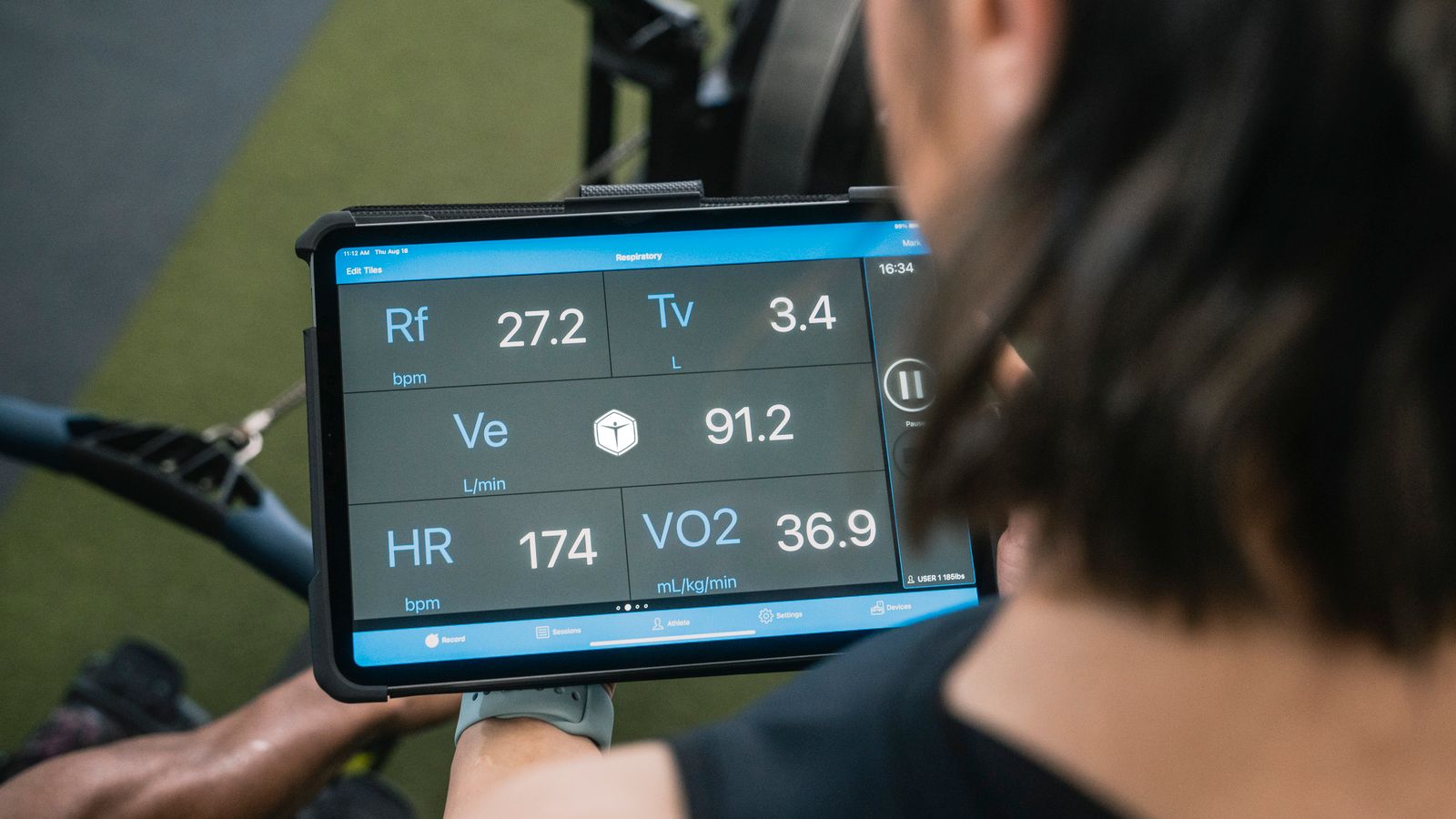
Behind the scenes of elite sports, an invisible yet radical transformation is gaining speed. Champions no longer train simply with a stopwatch or relying on gut feeling with their coach. They are now fitted with a host of miniaturized sensors that record their heart rate, pedal power output, body temperature, and even sleep quality in real time. These continuous physiological measurements feed computer software capable of detecting the slightest fatigue before the body even feels it. The goal is no longer just to train harder, but to calibrate every effort down to the second. This quest for mathematical precision raises a fundamental question: how far can an athlete’s body be digitized without stripping away the human elements of instinct, unpredictability, and emotion?
The real-world application of these technologies reached a milestone during the 2026 Tour de France within the prestigious UAE Team Emirates squad, which supports Slovenian champion Tadej Pogačar. Its performance director, Jeroen Swart, revealed that he continuously compiles heart rate variability*, power sensor data, and riders’ subjective feedback into a centralized artificial intelligence platform. While manually drafting a personalized physical assessment once required several days of intensive work from a medical staff, algorithms now generate 40 assessments in an hour. These tools pinpoint the optimal workload for each stage, fine-tuning training sessions to the millimeter to maximize recovery and athletic gains.
Understanding it
Constant biometric monitoring turns the body into a continuous stream of digital data.
Imagine an under-the-skin sensor transmitting your heart rate, sleep hours, and stress levels to your employer in real time. In professional sports, this tracking extends far beyond training sessions: algorithms analyze overnight recovery and personal life to forecast on-field performance.
This technological breakthrough delivers measurable gains that are transforming elite competition across many disciplines. Recent studies point to a documented 15% to 20% performance improvement from algorithmic tracking. Measurements show, for instance, gains of 15.2% in track cycling, 18.7% with next-generation wearables, and up to 20.3% in motion analysis applied to competitive skiing. However, this formidable efficiency creates a growing imbalance between wealthy teams that can afford such software infrastructure and more modest organizations. Sporting uncertainty, long the essence of competition, risks fading behind an equation where victory hinges on server computing power.
Faced with this massive collection of bodily information, regulatory bodies are beginning to set strict boundaries. In France, the data protection authority, CNIL, published an official recommendation on the collection of athletes’ biometric data*. The watchdog firmly reiterates that wearing a sensor must always rely on the athlete’s freely given consent and adhere to the principle of data minimization*. In practice, a club is only allowed to collect metrics strictly necessary for physical exercise, without turning an athlete’s private life into a permanent laboratory. Moreover, health data collected for training purposes cannot under any circumstances be repurposed for anti-doping enforcement or disciplinary sanctions.
At the European level, the legal framework is also tightening with the EU Artificial Intelligence Act, the AI Act*, adopted in 2024 and phasing into full application through 2026. The regulation classifies AI systems by risk tier and imposes strict oversight on high-risk applications, especially those assessing human behavior or impacting employment decisions. In professional sports, players’ unions such as FIFPRO are concerned about managerial uses of these algorithms: could a club deny a contract extension or cut wages based solely on a statistical score predicting future injury risk? The line between medical support and intrusive surveillance is growing increasingly blurred.
Understanding it
The European legal framework seeks to draw a clear line between athletic metrics and personal intrusion.
European law and the CNIL require health data to belong first and foremost to the individual generating it. In a locker room, this means a coach cannot force a player to wear a GPS tracker at home, nor use cardiac data to justify a pay cut without ethical oversight.
The future of elite sports stands at a crossroads between technical perfection and the preservation of the human element. On one hand, algorithmic optimization promises to reduce severe injury risks, extend careers, and deliver spectacles of unprecedented physical intensity. On the other, it threatens to reduce athletes to biological machines monitored 24/7, executing strategies designed by computers rather than their own intuition. Will professional sports manage to regulate these technologies to safeguard the uncertainty and emotion that thrill spectators? To shed light on this key issue, our editorial team examines three future scenarios for the role of algorithms in tomorrow’s arenas.
Documented performance improvement with AI15% to 20% depending on the discipline (cycling, skiing, connected sensors in 2026)
Les chiffres
L'IA apporte des gains de performance mesurés dans plusieurs disciplines.
RFEA (cyclisme)
15,2 %
Google Cloud (ski)
20,3 %
Sonar Atlas (objets connectés)
18,7 %
Sources : IBM, Google Cloud, Sonar Health — données 2026
Three pathways for the future of athletes facing algorithms
What we're assessing
FavorableL'IA demeure un simple conseiller médical strictement encadré, protégeant la santé du sportif et laissant le génie humain décider du résultat.
StableLes technologies s'installent progressivement sans règles claires, créant une surveillance quotidienne acceptée par habitude dans les grands clubs.
DégradéL'athlète devient un système vivant entièrement piloté par des algorithmes, où la stratégie et les contrats dépendent uniquement des capteurs.
Favorable
35%
Likely
AI remains a medical assistance tool governed by strict ethical rules
In this first scenario, international governing bodies and professional leagues establish binding ethical charters based on CNIL recommendations and AI Act requirements. Artificial intelligence is confined to clinical decision support and preventive optimization to avoid overtraining and muscular injuries. Athletes retain full ownership of their physiological data and can refuse to share intimate metrics at any time without facing sporting or financial penalties. During official competitions, headsets connected to real-time predictive models are banned to preserve tactical uncertainty, individual boldness, and the spontaneous feats that captivate fans.
This balanced scenario, assigned a 35% probability, serves as a protective alternative against technological overreach, but it demands strong political resolve that the other two scenarios view as compromised by commercial interests. Unlike the normalization of continuous surveillance or the full automation of tactical calls, this pathway ensures that creativity and raw talent take precedence over mathematical models. Clubs continue to value game intelligence and the human bond between coaches and players. If federations swiftly harmonize their rules under pressure from athlete unions, this ethical innovation model could sustainably safeguard the spirit of professional sports.
Indicators affected
Amélioration de performance documentée avec l'IA10 % à 15 %→15 % à 20 % actuellement sans garde-fous stricts
The France angleFrench academies and clubs benefit from a protective legal framework prioritizing young athletes’ health. ↑ Rather favorable for France.
Stable
45%
Likely
Biometric surveillance gradually becomes routine without structured public debate
In this second scenario, which represents the most likely outcome with a 45% probability according to our assessment, optimization technologies continue to spread rapidly across elite sports without meaningful global regulation. Athletes tacitly agree to wear increasingly intrusive sensors to stay competitive internationally, fearing they will be sidelined if they refuse vital sign tracking. Wealthier teams expand partnerships with tech giants to analyze their champions’ sleep, nutrition, and metabolism. Rules from the CNIL and the AI Act are applied minimally or sidestepped through boilerplate consent clauses embedded directly into employment contracts.
This middle trajectory stands in stark contrast both to strict ethical regulation (35%) and an immediate dystopian shift (20%): it advances through quiet, incremental compromises. Performance gains of 15% to 20% become the standard evaluation benchmark imposed by strength and conditioning coaches. Athletes grow accustomed to continuous monitoring, viewing bodily surveillance as a standard trade-off for high salaries. Unless major pushback emerges from locker rooms or governing bodies, this quiet optimization drive would slide into an irreversible algorithmic dependency where an athlete’s personal intuition loses all value against raw data.
Indicators affected
Amélioration de performance documentée avec l'IA15 % à 20 %↑généralisation du standard actuel dans tous les grands clubs
The France angleFrench athletes align with the surveillance standards imposed by wealthier foreign leagues. ↓ Rather unfavorable for France.
Degraded
20%
Unlikely
Athletes are reduced to biological systems entirely driven by algorithms
In this third scenario, the relentless pursuit of financial returns and victory turns professional athletes into mere executors of predictive algorithms. Biometric surveillance operates 24/7 through mandatory subdermal implants and smart textiles continuously tracking heart rate, oxygenation, and nervous stress. Starting lineups, in-game substitutions, and contract renewals are dictated by AI software assessing the risk of physical breakdown or statistical slumps. Coach intuition and player spontaneity are completely marginalized in favor of pinpoint game plans calculated by remote computers, eliminating sporting unpredictability.
Although evaluated at a 20% probability due to European legal safeguards, this hyper-technological scenario illustrates what would happen if market logic entirely overtook sporting ethics. Unlike the baseline scenario where some individual freedom remains, the athlete here becomes a pure financial asset, priced and optimized like industrial machinery. This shift risks alienating fans, weary of predictable and standardized contests where the flashes of genius from champions have vanished. If global private leagues break away from public regulators, competitive sports could lose their human essence, turning into a technological arms race between data engineers.
Indicators affected
Amélioration de performance documentée avec l'IAplus de 25 %↑hausse artificielle au détriment de l'autonomie et de la santé mentale
The France angleDeclining appeal of the French sports model compared to deregulated and dehumanized global leagues. ↓ Rather unfavorable for France.
Ordres de grandeur indicatifs pour les 3 scénarios ci-dessus, estimés avec l'information disponible à la publication et réévalués si la situation change — jamais des prévisions garanties. Learn more about our method → · How to read a probability →
Key takeaways
The core question is whether professional sports can preserve their human dimension amid the widespread adoption of artificial intelligence and round-the-clock biometric tracking.
Elite teams are already using on-body sensors and AI to generate 40 physiological assessments in an hour, delivering documented performance gains of 15% to 20%.
No, sports will not remain fully human without strict rules: our most likely scenario (45%) sees biometric surveillance take root as routine practice in locker rooms, while two other scenarios envision protective ethical guardrails (35%) or complete algorithmic dehumanization (20%).
The key signal to watch is sports clubs’ compliance with the European AI Act and the initial CNIL rulings on player contracts by late 2026.
Slightly negative
Our assessment of the impact for France: slightly negative.the combined 65% probability pointing toward increased biometric surveillance (45% in the baseline scenario and 20% in the degraded scenario) weakens athletes’ rights and the French ethical model.
Si tu devais retenir 1 chose
L'intelligence artificielle permet d'améliorer les performances sportives de 15 % à 20 %, mais pose la question du respect de la vie privée des athlètes face à la surveillance permanente.
Don't miss the next edition:
For those new to the topic
Quick glossary
biometric data
Digital information relating to a person’s physical, physiological, or behavioral characteristics, such as heart rate or body temperature, subject to heightened legal protection.
AI Act
European regulation adopted in 2024 governing the development and use of artificial intelligence systems by imposing transparency obligations based on application risk levels.
data minimization
Fundamental GDPR principle requiring organizations to collect and process only the information strictly necessary and relevant to the specific purpose communicated to the user.
heart rate variability
Scientific measurement of interval variations between consecutive heartbeats, used by fitness and conditioning coaches to accurately assess nervous system fatigue.