Every day, one story that matters, broken down into three numbered scenarios, each with its own probability. Never fixed — it shifts as the situation changes.
Scénario
Wednesday, French current affairs
Banned Pesticides: Can Anses Really Say No?
Published on September 2, 2026
Share:
The question
Referred to Anses in late August 2026, the agency has two months to rule on acetamiprid and flupyradifurone, banned since 2018: can it really say no to them?
The facts
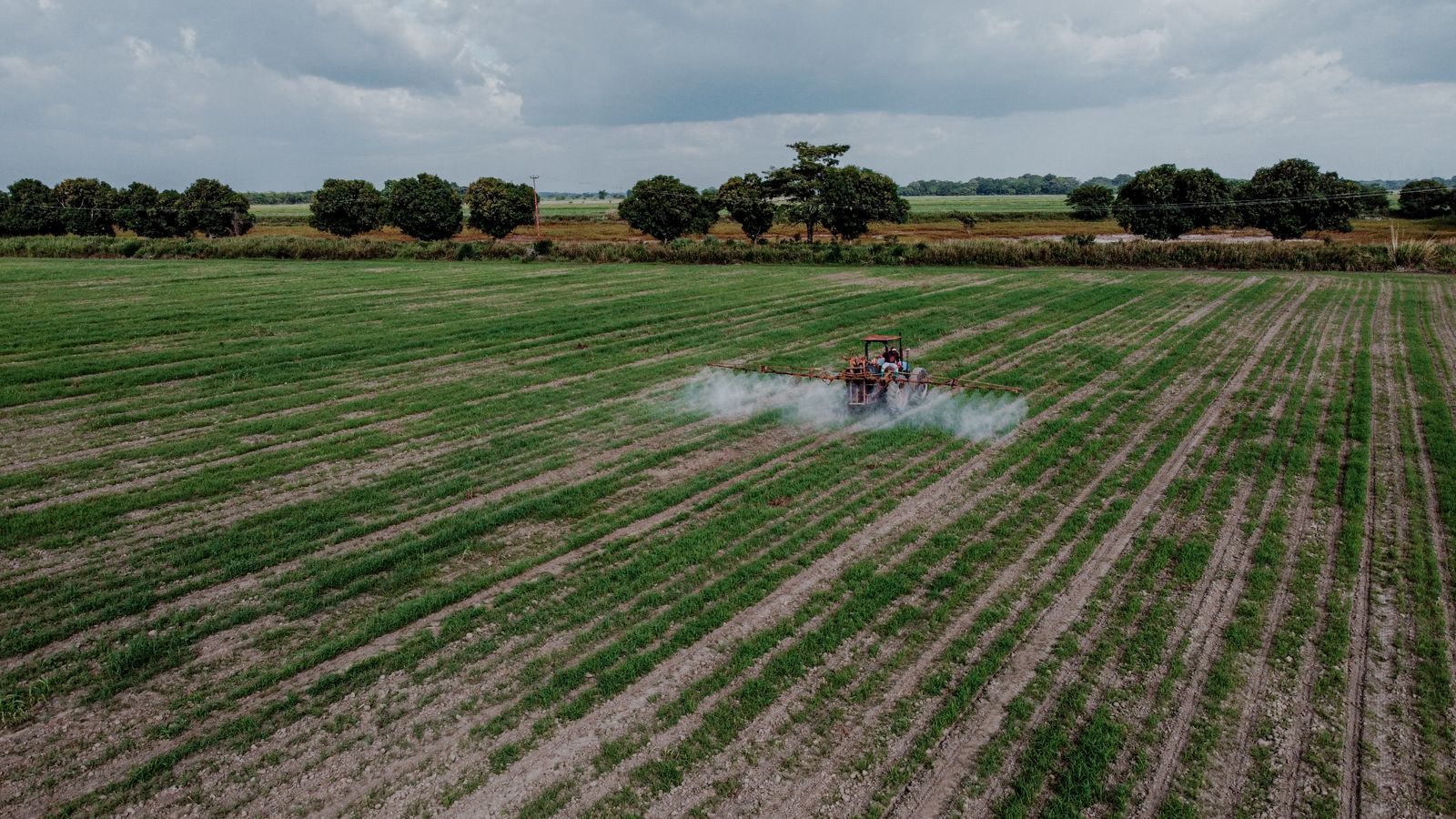
Since 2018, France has banned the use of two neonicotinoid* insecticides — acetamiprid and flupyradifurone — judged too dangerous for bees and other pollinators, even though they remain authorized elsewhere in Europe until 2033. The practical result for some French farmers, like hazelnut growers: France harvests only 13,000 tonnes of hazelnuts a year (5,800 hectares), far behind Italy (85,000 tonnes, roughly 80% of EU output) and above all Turkey, which alone supplies 70% of the world market — two countries where acetamiprid remains authorized on this crop, on a derogation basis.
This isn't excessive caution: a study published in March 2025 in the journal Communications Earth & Environment measured mortality reaching as high as 92% among three insect species living at the edges of fields treated with acetamiprid, even at low doses and without direct contact with the product. Beyond bees, the molecule is also documented as harmful to birds, amphibians and other invertebrates. On the human side, Efsa*, the EU's food safety authority, cut acetamiprid's acceptable daily intake fivefold in 2024, citing unresolved uncertainty over its neurotoxic potential. That same year, it launched a full review of the substance's approval, to close data gaps on its effects on fetal development and the hormonal system.
On July 21, 2026, Parliament gave final approval to an emergency farming law that allows Anses*, France's food and environmental safety agency, to reintroduce these two pesticides on a derogation* basis for the hardest-hit sectors. Ecological Transition Minister Monique Barbut then announced her resignation, calling the measure "one environmental setback too many." Received by Emmanuel Macron the next day, she ultimately chose to stay in government — an episode that shows just how divisive the issue is, even at the top of the executive.
On August 14, 2026, the Constitutional Council validated most of the text, derogation included — a notable reversal: almost exactly a year earlier, it had struck down a similar attempt, the 2025 Duplomb law, as insufficiently regulated. This time, the justices judged that the added safeguards (a prior scientific opinion, a three-year cap, precisely named crops) were enough to make the measure constitutional. The law was enacted five days later, on August 19.
Comprendre
Saying "science decides" means nothing if science isn't given the time to decide.
The law hands the final call to Anses rather than to Parliament — a show of rigor from the government. But it gives the agency only two months to rule. According to one of its own staff, a pesticide evaluation normally takes at least a year, with a full team. So the real question isn't who decides, but whether the imposed deadline leaves Anses enough time to actually decide.
Still, the law doesn't reauthorize anything by itself: it hands the decision to Anses, which must confirm that no "alternative solution" exists and that using the pesticide is "not likely to pose significant risks to human health" or to "seriously and irreversibly affect the environment." In late August, Agriculture Minister Annie Genevard formally referred the matter to the agency, which has two months to rule — a deadline several of its own staff consider unworkable.
On the other side, Générations Futures, the group already behind the legal challenges that struck down an earlier version of the law in 2025, says it will sue over any authorization. The dilemma cuts both ways: an Anses refusal would be a first in this year-plus legislative fight; an authorization, even a limited one, would open the door for other struggling farming sectors to demand the same treatment.
Comprendre
France is the only EU country that bans acetamiprid in farming — its neighbors don't.
Italy and Spain already allow the substance on hazelnuts, on a derogation basis. The result: Italian and Turkish hazelnuts arriving in France may already have been treated with acetamiprid. France's derogation doesn't create anything new at the EU level — it mostly brings France into line with a practice already common among its neighbors.
The timeline behind Anses's decision
1August 7, 2025 — A first rejectionThe Constitutional Council strikes down a first attempt to re-authorize the pesticides, the Duplomb law, ruling it insufficiently regulated.
2July 21, 2026 — A new bill, a resignation walked backParliament adopts a more tightly regulated version; Minister Monique Barbut announces, then withdraws, her resignation.
3August 14, 2026 — The Constitutional Council changes courseThis time it validates the bulk of the law, derogation included, with two interpretive reservations.
4August 19, 2026 — EnactmentPublished in the Official Journal, the derogation becomes legally possible, pending Anses's opinion.
5Late August 2026 — Anses is formally referred the caseAgriculture Minister Annie Genevard refers the matter to the agency, which has two months to rule.
6Late October 2026 — The decision, to watchLegal deadline for the two-month window: Anses must have ruled, one way or the other.
None of these steps have shown whether Anses can really meet the two-month deadline set by the law — that's exactly what the late-October decision will settle.
Banned pesticides re-authorized (out of 2)0 Anses referred the case in late August 2026, decision expected within 2 months
Crops covered by the derogation0 up to 4 crops covered by the August 19, 2026 law
Favorable, stable or degraded
Can Science Really Say No to Banned Pesticides?
What we're assessing
FavorableAnses holds the line and refuses, or sharply limits, the derogation.
StableIt grants the derogation exactly as the law provides, without going further.
DegradedThe derogation expands beyond its original scope, under pressure from struggling sectors.
Favorable
25%
Unlikely
Anses Refuses the Derogation, Citing Insufficient Guarantees
Referred to Anses in late August 2026, the agency has two months to rule on acetamiprid and flupyradifurone. Internally, some of its own staff consider that deadline unworkable: a serious evaluation normally takes at least a year, with a full team. Lacking enough data to rule out a significant risk to health or the environment — the very condition set by the law itself, while studies already document high insect mortality at the edges of treated fields — Anses refuses the derogation for both substances, or grants it only in a form so restrictive it remains unusable in practice for the crops concerned.
This is the least likely of the three scenarios: the Constitutional Council validated the law on August 14, judging its safeguards sufficient to make it constitutional — a political stamp of approval that points more toward authorization. Less likely than the stable scenario, where Anses grants the derogation as planned, and far less likely than the degraded scenario, where farming-sector pressure wins out.
Indicators affected
Banned pesticides re-authorized (out of 2)0→(vs 0, Aug. 2026)
Crops covered by the derogation0→(vs 0, Aug. 2026)
The France angle
Anses refuses or drastically limits the derogation: acetamiprid and flupyradifurone remain effectively out of French fields, as they have been since 2018. ↑ Rather favorable for France.
Stable
45%
Likely
Anses Grants the Derogation, But Only for the Crops the Law Covers
Within the two-month window, Anses approves a tightly bounded derogation: acetamiprid by spray for hazelnut growers only — a French sector of 13,000 tonnes, far outsized by Italy and Turkey —, flupyradifurone for sugar beet (coated seed), cherries and apples (spray) — exactly the scope voted by Parliament, for a maximum of three years. Générations Futures, which had said it would sue if any authorization were granted, takes the case to the Council of State, but without winning a suspension before the first field applications.
This is the most likely of the three scenarios: the Constitutional Council has already validated the mechanism, the government needs a concrete result for struggling sectors, and the format set by the law — limited duration, named crops — gives Anses a clear framework to apply without having to rule beyond it. More likely than the favorable scenario, which assumes a politically costly refusal for a sector already outpaced by its European competitors; more likely too than the degraded scenario, which assumes an expansion the current text doesn't provide for.
Indicators affected
Banned pesticides re-authorized (out of 2)2↑(vs 0, Aug. 2026)
Crops covered by the derogation4↑(vs 0, Aug. 2026)
The France angle
Hazelnut, apple, cherry and sugar beet producers targeted by the law regain limited, temporary use of these pesticides, but pollinators and biodiversity pay the price, even within the same limits. ↓ Rather unfavorable for France.
Degraded
30%
Likely
The Derogation Expands Beyond What the Law Allows
Anses grants the derogation for the four crops covered by the law, but other struggling farming sectors demand the same treatment, pointing to the hazelnut precedent — and to the same argument already used for it, competition from countries like Italy where acetamiprid remains authorized. Under pressure, a new bill or decree widens the list of crops or pesticides covered — the outcome Monique Barbut feared when she threatened to resign. Générations Futures wins an early procedural victory before the Council of State, without stopping the expansion on substance.
This scenario remains less likely than the stable one, since the current law precisely bounds the crops and molecules involved, with no automatic expansion mechanism. But it's more likely than the favorable scenario: the farming-sector pressure that already forced the Constitutional Council to change course once, between 2025 and 2026, has no reason to stop there if the hazelnut precedent works — especially since France remains the only EU country still banning these molecules, an argument other sectors are sure to reuse.
Indicators affected
Banned pesticides re-authorized (out of 2)2↑(vs 0, Aug. 2026)
Crops covered by the derogation6+↑(vs 0, Aug. 2026)
The France angle
The derogation expands beyond the crops it was meant to cover, or a new emergency procedure targets other banned pesticides: the promise that "science decides" loses all credibility. ↓ Rather unfavorable for France.
Rough estimates for the 3 scenarios above, based on the information available at publication and reassessed as the situation changes — never guaranteed forecasts. Learn more about our method →
The essentials
Can Anses really refuse to re-authorize two banned pesticides, as promised by the law that hands it this decision?
The emergency farming law, validated by the Constitutional Council on August 14, 2026 and enacted on August 19, allows Anses to grant a temporary derogation for acetamiprid and flupyradifurone, two pesticides banned in France since 2018, for 4 struggling farming sectors (hazelnut, apple, cherry, sugar beet).
The most likely scenario (45%): Anses grants the derogation exactly within the scope set by the law, for a maximum of three years, without expanding it further.
Signal to watch: Anses's decision, expected by late October 2026, two months after being referred the case by the Agriculture Minister.
Fairly negative
Our assessment of the impact on France: fairly negative. The stable scenario (45%) and the degraded scenario (30%) both bring pesticides banned on health and environmental grounds back into French fields, at least partly — against just a 25% chance that Anses holds the line and refuses the derogation.
A family of insecticides that act on insects' nervous systems, including beneficial species like bees — hence their nickname, "bee killers."
Efsa
The European Food Safety Authority, the EU agency that assesses the health risks of chemical and food products on behalf of all member states.
Anses
France's national food and environmental safety agency, the public body responsible for assessing the risks of chemical products, including pesticides, before they can be authorized.
Derogation
An exceptional, temporary authorization to use a product that is normally banned, granted under strict conditions and for a limited time.