Every day, one story that matters, broken down into three numbered scenarios, each with its own probability. Never fixed — it shifts as the situation changes.
Scénario
Sunday, sport
Women's Sport: The Law Now Requires Sharing the Money
Published on September 6, 2026
Share:
The question
France's law of August 3, 2026 requires financial solidarity between men's and women's professional sport, without setting any amount: will the funding gap actually narrow?
The facts
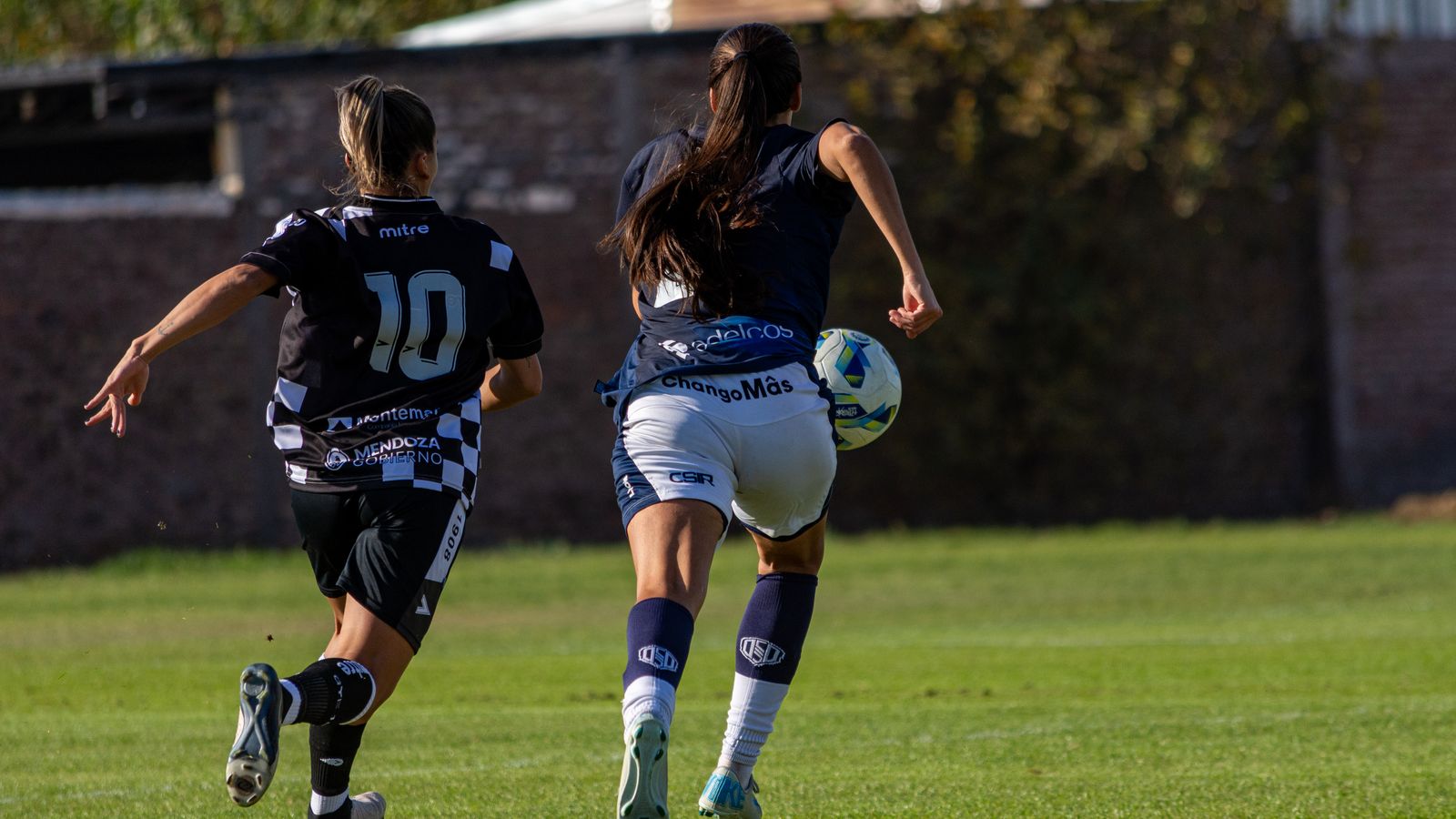
France's women's football championship kicked off again this weekend. Twelve clubs, a first round played on September 5 and 6, a regular season running until May 4, 2027. It is also the first season played under a new financial rule: law no. 2026-725 of August 3, 2026 on the organization, management and financing of professional sport, published in the Official Journal on August 4. Its article 6 requires delegated federations* to ensure a principle of solidarity, "financial in particular," between the men's and the women's professional sectors. Every federation will have to report on it once a year to the sports minister and to the Standing Conference on Women's Sport*, in a publicly released report.
The rest of the text points the same way. Article 8 allows a federation to create two separate professional leagues, one for men and one for women; article 21 allows the same split for the commercial companies. Article 19 asks broadcasters to contribute to the visibility of women's sport. Article 22 caps at a one-to-three ratio the distribution of broadcasting revenue between clubs in the same competition. But one thing is missing everywhere: an amount. The law sets no transfer percentage, no floor, no quantified penalty. And several implementing decrees have yet to be published, including the one meant to define exactly what the annual report must contain.
Comprendre
A solidarity rule doesn't create money: it moves it. What it yields therefore depends on the health of whoever pays.
France already knows this mechanism through the Buffet tax*. It takes 5% of professional sport's broadcasting rights to fund amateur sport, and brought in €47.1 million net in 2024. But since men's football TV rights collapsed, the Senate expects a loss of about €4 million a year for the national sports agency, at least until 2028. When the resource shrinks, solidarity shrinks with it.
That is the new law's first weak spot: the main pot of money meant to feed this solidarity, men's football, is emptying right now. Domestic TV rights for Ligue 1 have fallen from roughly €500 million to €170 million per season. We've already covered a similar topic on the collapse of those TV rights — see our article to find out more. The second weak spot showed up this summer: the DNCG* barred the women's section of Dijon FCO from national competitions, for lack of sufficient financial guarantees for 2026-2027. The club chose not to appeal on July 7 and filed for the liquidation of the company that ran its professional women's team. RC Lens was moved up in its place. Dijon had finished sixth in the league a few weeks earlier: a mid-table team can vanish in a single off-season.
Then there is the gap the law claims to narrow. Handball is the only French team sport where both top divisions publish comparable budgets, for the same season, using the same method. For 2026-2027, the twelve clubs of the Ligue Butagaz Énergie (the women's top division) are worth €32.91 million combined, or €2.74 million per club on average. The sixteen clubs of the Starligue (the men's top division) are worth €98.56 million, or €6.16 million on average. On pay, a professional female handball player earns €3,273 gross per month on average, a male player €6,279. In football the gap is far wider: the average salary in France's women's top division is €2,494 gross per month, according to the French Football Federation, with a minimum set at €1,820.
Handball: the women-men gap, indicator by indicator (2026-2027 season)
1Median salary: €2,462 against €4,675 gross per monthThat is 53% of the men's level. This is the indicator with the smallest gap.
2Combined payroll*: €19.68 million against €36.85 millionThat is 53%, for twelve women's clubs against sixteen men's clubs.
3Average salary: €3,273 against €6,279 gross per monthThat is 52%. A female player earns roughly half what a male player earns.
4Average budget per club: €2.74 million against €6.16 millionThat is 44%. The gap widens as soon as you look at the whole club, not just salaries.
5Combined budget of the top division: €32.91 million against €98.56 millionThat is 33%, the widest gap. Three men's clubs (Paris, Nantes, Montpellier) alone account for nearly 40% of the Starligue's budget.
One figure sums up the rest: women's clubs spend 59.7% of their budget on salaries, against 43% on the men's side. They spend a much larger share of a much smaller pot — which leaves very little for everything else: youth development, facilities, travel or communication.
The gap is not frozen, though. In one year, the average budget of a club in the women's handball top division rose from €2.53 million to €2.74 million, and the average payroll grew by more than 33%. French women's football created its own professional league, the LFFP, in 2024, with a championship renamed Arkema Première Ligue. That is exactly the path article 8 of the law opens up: a separate structure that sells its own rights and finds its own partners, rather than a line item in a men's club budget.
Comprendre
There are two ways to close a money gap: receive a share of your neighbor's, or make your own. The law opens both doors at once.
The English example leans toward earning its own revenue. Women's Super League clubs took over their championship through a company they own, and signed a £65 million television deal covering three seasons. Their collective revenue jumped 34% in 2023-2024. No legal obligation to share with men's football in any of it: money earned, not money handed over.
Hence real uncertainty over the coming seasons. On one side, a legal obligation now exists, with a yearly public checkpoint that will make visible what each federation actually does. On the other, that obligation puts no number on anything, its decrees are still missing, and the money in French men's sport is shrinking at the very moment it is being asked to share. The federations' first report will only arrive at the end of the 2026-2027 season. Three paths therefore remain open, and they do not depend on the same players: the government for the decrees, the federations for the amounts, the clubs for what actually happens on the ground.
Average salary in France's women's top football division€2,494 gross/month (2025-2026) ▼ federation minimum set at €1,820 gross/month
Average budget of a club in France's women's top handball division€2.74M (2026-2027) ▼ 2.2 times less than the €6.16M of a men's Starligue club
Favorable, stable or degraded
Will the money gap between men's and women's sport narrow?
What we're assessing
FavorableFederations set precise amounts and women's sport budgets rise sharply.
StableThe obligation stays without an amount: women's budgets grow at the same slow pace as before the law.
DegradedMen's sport money shrinks further and solidarity is reduced to a reporting exercise.
Favorable
20%
Unlikely
Federations set an amount and women's budgets rise
The implementing decrees come out within the year. The annual report forces every federation to publish a figure, not just a list of intentions. One or two major federations — football, handball, basketball — announce a precise percentage transferred from the men's sector to the women's sector. Clubs follow, because the figure can be compared from one federation to the next and nobody wants to sit last in the table. Top-division women's budgets then grow much faster than the 8% handball gained in a year. The average salary of a female footballer climbs past €3,000 gross.
This is the least likely of the three scenarios, because it needs two things that don't exist yet: decrees published quickly, and federations imposing on themselves a figure the law never asks them for. Less likely than the stable scenario, which requires no new decision at all. Less likely, too, than the degraded one, whose main driver — falling TV rights in men's football — is already under way.
Indicators affected
Average salary, women's top football division€3,000-3,300/month↑(vs €2,494 in 2025-2026)
Average budget, women's top handball division€3.1M-3.4M↑(vs €2.74M in 2026-2027)
The France angle
More stable professional contracts for French players, fewer women's sections shutting down mid-off-season, and clubs finally able to spend on something other than salaries: youth development, coaching staff, travel. ↑ Rather favorable for France.
Stable
50%
Likely
The obligation stays without an amount and budgets barely move
The annual report does exist, but it describes actions instead of giving sums. Each federation recounts what it already does: a youth academy, a visibility campaign, a shared training ground. Nothing is untrue, nothing is comparable from one federation to the next. Women's budgets keep rising at their pre-law pace, a few points a year, driven mostly by private partners and local authorities. The funding gap stays where it is: around half the men's level on salaries, a third on overall budgets.
This is the most likely of the three scenarios, because it requires no decision: it is what happens if nobody does anything beyond what the law spells out. More likely than the favorable scenario, which assumes voluntary figures the text never demands. More likely, too, than the degraded one, since women's budgets have still been growing for two seasons, carried by sponsors who don't depend on men's football.
Indicators affected
Average salary, women's top football division€2,500-2,700/month→(vs €2,494 in 2025-2026)
Average budget, women's top handball division€2.8M-2.9M→(vs €2.74M in 2026-2027)
The France angle
A law passed, a report published, and on the ground the same salaries around €2,500 gross, the same clubs on tight budgets, the same players keeping a second job or retiring early. The gap doesn't widen, but it doesn't close either. ↓ Rather unfavorable for France.
Degraded
30%
Likely
Men's sport money shrinks and more women's teams shut down
Revenue in men's professional sport keeps falling, TV rights first. Clubs cite their own losses to cut what they pay their women's section. Solidarity is limited to the annual report, with no money behind it. Women's sections follow Dijon's path: financial guarantees judged insufficient, exclusion by the DNCG, another club moved up instead. The number of professional contracts for women falls, and the average budget of the women's top division drops back below its 2026-2027 level.
This scenario is still less likely than the stable one, because women's budgets don't depend on men's sport alone: sponsors, local authorities and the women's league's own rights carry part of the financing. But it is more likely than the favorable one, because its cause is already here and measured: domestic Ligue 1 TV rights have fallen from €500 million to €170 million per season, and one professional women's club has already disappeared this summer.
Indicators affected
Average salary, women's top football division€2,100-2,400/month↓(vs €2,494 in 2025-2026)
Average budget, women's top handball division€2.3M-2.6M↓(vs €2.74M in 2026-2027)
The France angle
Professional players find themselves without a club mid-season, as at Dijon, and championships are played with reduced line-ups after last-minute reinstatements. Elite practice becomes a fragile plan again for the young girls who commit to it. ↓ Unfavorable for France.
Rough estimates for the 3 scenarios above, based on the information available at publication and reassessed as the situation changes — never guaranteed forecasts. Learn more about our method →
The essentials
Can a law narrow the money gap between men's and women's sport when it writes down no amount at all?
In handball, the only French team sport where both top divisions publish their accounts for the same season, a women's club has €2.74 million on average in 2026-2027, against €6.16 million for a men's Starligue club; a female player there earns €3,273 gross per month, a male player €6,279.
Most likely (50%): solidarity stays an obligation to report with no precise sum attached, women's budgets gain a few points a year as they did before the law, and the gap stays where it is.
Signal to watch: the publication of the implementing decrees, including the one defining the annual report, then the federations' first report to the sports minister and the Standing Conference on Women's Sport, expected at the end of the 2026-2027 season.
Fairly negative
Our assessment of the impact on France: fairly negative. The stable and degraded scenarios together add up to an 80% chance, and both leave French sportswomen far from the resources of their male counterparts — the stable one by freezing the gap, the degraded one by widening it. Only the favorable scenario, at 20%, would genuinely narrow it.
A sports federation to which the French state entrusts the running of a discipline: it sets the rules, crowns the champions and oversees professional clubs, which makes it accountable to the sports ministry.
Standing Conference on Women's Sport
A body attached to the French sports ministry, bringing together federations, media and institutions to track the place of women in sport and issue recommendations.
DNCG
The national management control body, French football's financial watchdog: it audits club accounts and can bar from competition those whose financial guarantees are deemed insufficient.
Buffet tax
A 5% levy on the sale of television broadcasting rights for professional sport in France, created in 2000, whose proceeds fund amateur sport through the national sports agency.
Payroll
The total a club pays in salaries over a season: the biggest expense line of a professional club, and the most direct measure of what it can offer its players.