Every day, one story that matters, broken down into three numbered scenarios, each with its own probability. Never fixed — it shifts as the situation changes.
Scénario
Sunday, sport
Nations Championship: Rugby’s New King?
Can the Nations Championship establish itself as global rugby’s premier competition, or will it cannibalize historic tournaments without winning over fans?
Publié le 4 octobre 2026
Share:
The facts
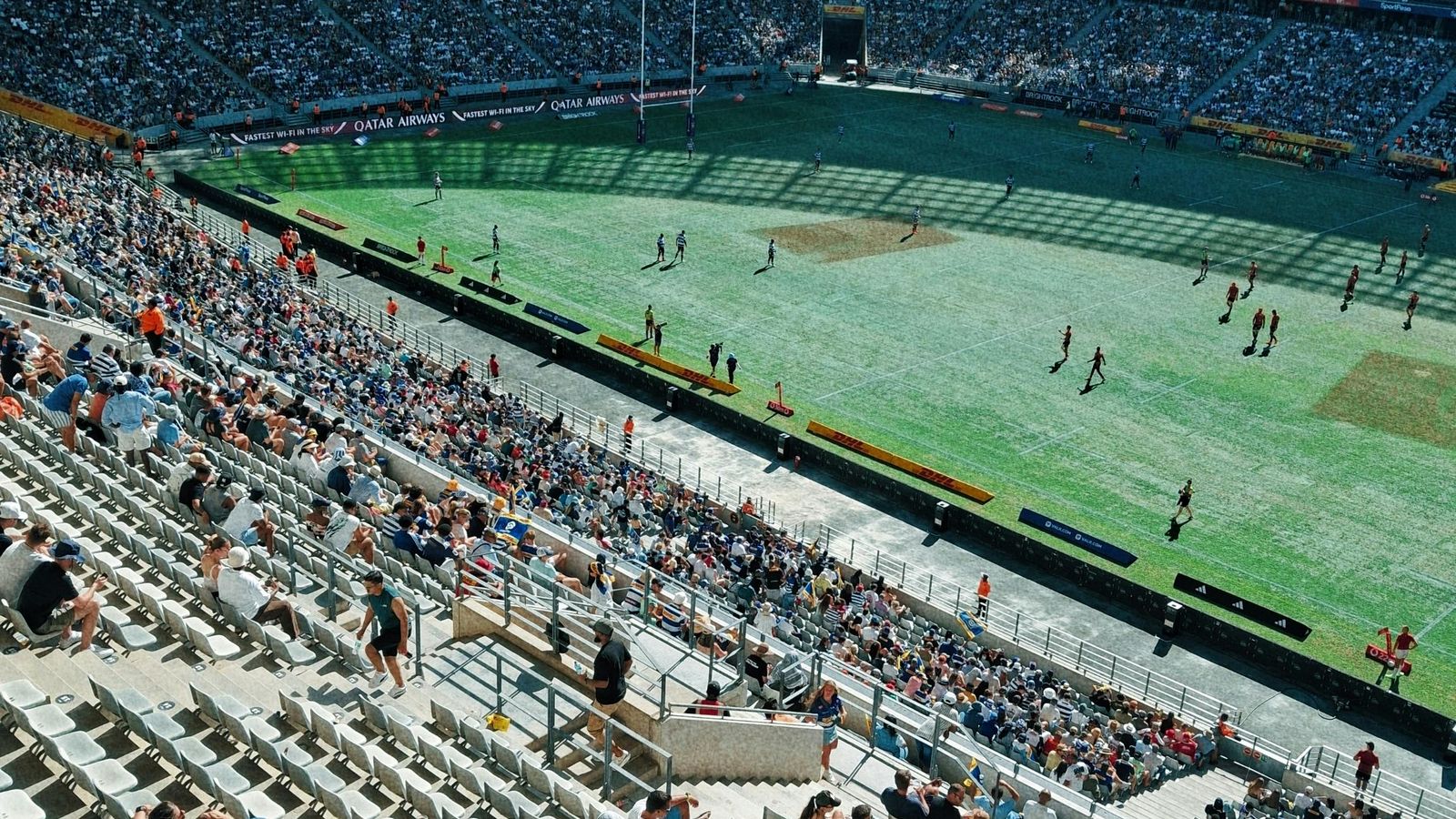
Since July 2026, the rugby world has been undergoing a major calendar overhaul with the official launch of the Nations Championship. Designed and managed by World Rugby, this new biennial tournament brings together the globe’s twelve best nations in a closed structure split across two distinct hemispheres. The six major Northern teams from the Six Nations (France, Ireland, England, Scotland, Italy, Wales) compete remotely against the Southern Hemisphere’s six powerhouses (South Africa, New Zealand, Argentina, Australia, Fiji, Japan). Governing bodies aim to bring clarity to traditional friendly tours by replacing them with direct competitive stakes, culminating in an official global trophy every two years.
Understanding it
Why create a global tournament on top of existing competitions?
World Rugby aims to monetize former summer and autumn test matches by attaching points and silverware, turning standard fixtures into a continuous international competition.
This novel tournament relies on a calendar split into two distinct windows across the globe. During the first three rounds played over the southern hemisphere’s winter, northern national teams traveled to the Southern Hemisphere to challenge their counterparts. Following this opening phase concluded at the end of September, the French national team took 1st place in the northern standings. Fabien Galthié’s squad secured 2 bonus-point wins along with both defensive and attacking bonus points during their narrow 34-32 opening defeat against the All Blacks in Christchurch. The competition now continues in November with home fixtures on European soil.
Understanding it
How does the two-hemisphere system work?
Six Northern teams play six Southern teams without facing rivals from their own hemisphere. The top Northern team then takes on the top Southern team in a winner-takes-all final in London.
The creation of this competition stems from a search for financial and sporting coherence, yet it raises serious concerns regarding player welfare and the balance of domestic leagues. To accommodate a congested international schedule, the Six Nations Championship had to be compressed into six weeks instead of seven, reducing recovery time. In France, the Ligue Nationale de Rugby negotiated fiercely to limit calendar clashes* to protect the appeal of the Top 14. Meanwhile, emerging nations, often referred to as Tier 2*, find themselves locked out of the elite until 2030, the scheduled date for potential promotion play-offs.
Autumn 2026 marks the climax of this inaugural edition with a particularly demanding schedule for Les Bleus. France will host Fiji on November 7, South Africa on November 14, and Argentina on November 21 on French soil. Each clash will award crucial points to determine the winner of each hemisphere. The top team from each geographical pool will earn a spot in the grand final scheduled for November 29, 2026 at London’s iconic Allianz Stadium, formerly known as Twickenham. This winner-takes-all clash will crown the first champion of this intercontinental format and test fan enthusiasm on neutral ground.
The central challenge of this initiative lies in World Rugby’s ability to captivate a global audience without tiring fans through an overabundance of blockbuster international clashes. While the fierce rivalry between the Springboks and the All Blacks instantly electrified the southern standings, organizers must prove that interest extends beyond traditional diehards. No public data on TV viewership or overall ticket sales has yet been consolidated to gauge the tournament’s real economic impact. Observers also question how easily casual viewers can grasp the split-hemisphere standings, as they may struggle to distinguish this competition from traditional November test tours.
This overhaul is part of a broader trend where sports governing bodies seek to maximize commercial rights against competition from modern entertainment giants. Echoing reforms across other disciplines, rugby is attempting to create a permanent premium product at the risk of saturating the media landscape. The success or failure of this inaugural edition will determine whether the Nations Championship becomes a cornerstone of world rugby or is forced to rework its rules to avoid undermining the World Cup and historic competitions. Three contrasting trajectories emerge for the future of this global sporting model.
Northern standings — France1st place after 3 summer rounds
France’s bonus-point wins after 3 rounds2 out of 3 matches played in July
New global tournament or schedule overload: three scenarios for rugby
What we're assessing
FavorableLe tournoi s'impose comme un blockbuster mondial rentable qui respecte l'équilibre des clubs et valorise le titre.
StableL'épreuve coexiste pacifiquement avec les Six Nations sans déclencher une ferveur populaire exceptionnelle.
DégradéLa saturation du calendrier et le manque de lisibilité entraînent un désintérêt du public et la contestation des ligues.
Favorable
25%
Likely
Immediate Popular Success and Global Crown
Under this scenario, the Nations Championship reaches a decisive turning point thanks to massive turnout and viewership starting in November. France capitalizes fully on its 1st place earned this summer and maintains momentum during its high-profile home fixtures against Fiji, the Springboks, and the Argentine Pumas. Driven by spectacular attacking play, Les Bleus secure their spot in the grand final on November 29, 2026 in London and lift the inaugural trophy in front of a sold-out stadium. This sporting triumph sparks immense public enthusiasm in France and immediately establishes the event as a prestigious biennial fixture, generating record commercial revenues across all member unions.
Contrary to initial fears of calendar saturation, this momentum proves that fans embrace a structured competition with genuine stakes in every match, surpassing the appeal of former friendlies. This trajectory proves far more rewarding than the baseline scenario where the tournament remains a mere technical rescheduling, or the downside scenario marked by backlash from professional clubs. Domestic leagues accept calendar adjustments in exchange for shared commercial windfalls. If this commercial and media enthusiasm is confirmed during the autumn fixtures, the Nations Championship could firmly anchor itself at the top of the international sporting hierarchy.
Indicators affected
Classement nordiste — France1re place confirmée↑1re place après l'été
Victoires bonifiées de la France4 victoires bonifiées↑2 après 3 journées
The France angleA historic global title consolidating France’s top-tier status and boosting the domestic rugby economy. ↑ Rather favorable for France.
Stable
50%
Likely
Controlled Coexistence Without Excessive Fervor
In this baseline scenario, the new competition finds its cruising speed without fundamentally upending fan habits or rugby’s overall economy. France delivers a solid autumn campaign, remaining competitive against Southern Hemisphere nations, but falls short of qualifying for the London final amid stiff competition from Scotland or Ireland. Stadium attendances remain strong for marquee matchups, while TV viewership holds at usual autumn tour levels without breaking records. The tournament is accepted by international governing bodies as a rational calendar adjustment.
This scenario differs from a commercial triumph due to the lack of genuine hype among casual viewers, who continue to favor the century-old charm of the Six Nations and the quadrennial pinnacle of the World Cup. However, it avoids the backlash of the downside scenario by maintaining labor peace with Top 14 clubs through acceptable release windows for international players. The Nations Championship achieves its optimization goals without becoming a cultural phenomenon in its own right. According to our analysis, this institutional normalization appears to be the most realistic equilibrium for upcoming seasons.
Indicators affected
Classement nordiste — France2e place nordiste↓1re place après l'été
Victoires bonifiées de la France3 victoires bonifiées↑2 après 3 journées
The France angleA respectable campaign without a trophy, maintaining the balance between the Top 14 and the national team. ↑ Rather favorable for France.
Degraded
25%
Likely
Format Rejection and Open Institutional Conflict
In this adverse scenario, the competition encounters widespread public indifference and fierce pushback from professional clubs. The hybrid two-hemisphere format proves confusing to viewers, while the final in London struggles to fill seats without a compelling local matchup. An early elimination of France from the race for the final deprives the event of its primary audience driver in the country. The grueling schedule imposed on elite athletes triggers a wave of major injuries, reigniting accusations of player burnout and angering French club presidents who see their squads depleted midway through the domestic season.
This outcome stands in stark contrast to World Rugby’s hopes for prosperity, exposing the limits of a closed tournament that excludes emerging nations without elevating the spectacle. Unlike the stable scenario where tensions remain contained, historic unions and professional leagues openly challenge the very concept of the biennial tournament, demanding a return to more flexible traditional tours. The economic model falters under heavy operating costs and broadcaster disinterest. If these structural roadblocks prevail, this experimental competition could quickly vanish from the international calendar.
Indicators affected
Classement nordiste — France3e ou 4e place↓1re place après l'été
Victoires bonifiées de la France2 victoires bonifiées→2 après 3 journées
The France angleEscalating tensions between the FFR and Top 14 clubs, alongside severe player fatigue for internationals. ↓ Rather unfavorable for France.
Ordres de grandeur indicatifs pour les 3 scénarios ci-dessus, estimés avec l'information disponible à la publication et réévalués si la situation change — jamais des prévisions garanties. Learn more about our method →
Key takeaways
Can the Nations Championship permanently establish itself as world rugby’s new summit without undermining historic tournaments or burning out players?" his
Launched in July 2026 by World Rugby with twelve elite nations, the tournament sees France holding 1st place in the North with 2 bonus-point wins ahead of November’s clashes.
Not entirely: our most likely scenario (50%) points to a functional coexistence with the Six Nations without revolutionary fan fervor, alongside two alternatives: immediate triumph (25%) or institutional failure (25%).
The inaugural final scheduled for November 29, 2026 at London’s Allianz Stadium will serve as a real-world test of genuine fan enthusiasm.
Moderately positive
Our assessment of the impact for France: moderately positive.the combined 75% probability assigned to a tournament that is either competitively beneficial or stable for France outweighs the 25% risk tied to scheduling conflicts with the Top 14.
Si tu devais retenir 1 chose
Avec sa 1re place nordiste et 2 victoires bonifiées cet été, le XV de France aborde en favori le sprint final du Championnat des Nations jusqu'à la finale du 29 novembre 2026 à Londres.