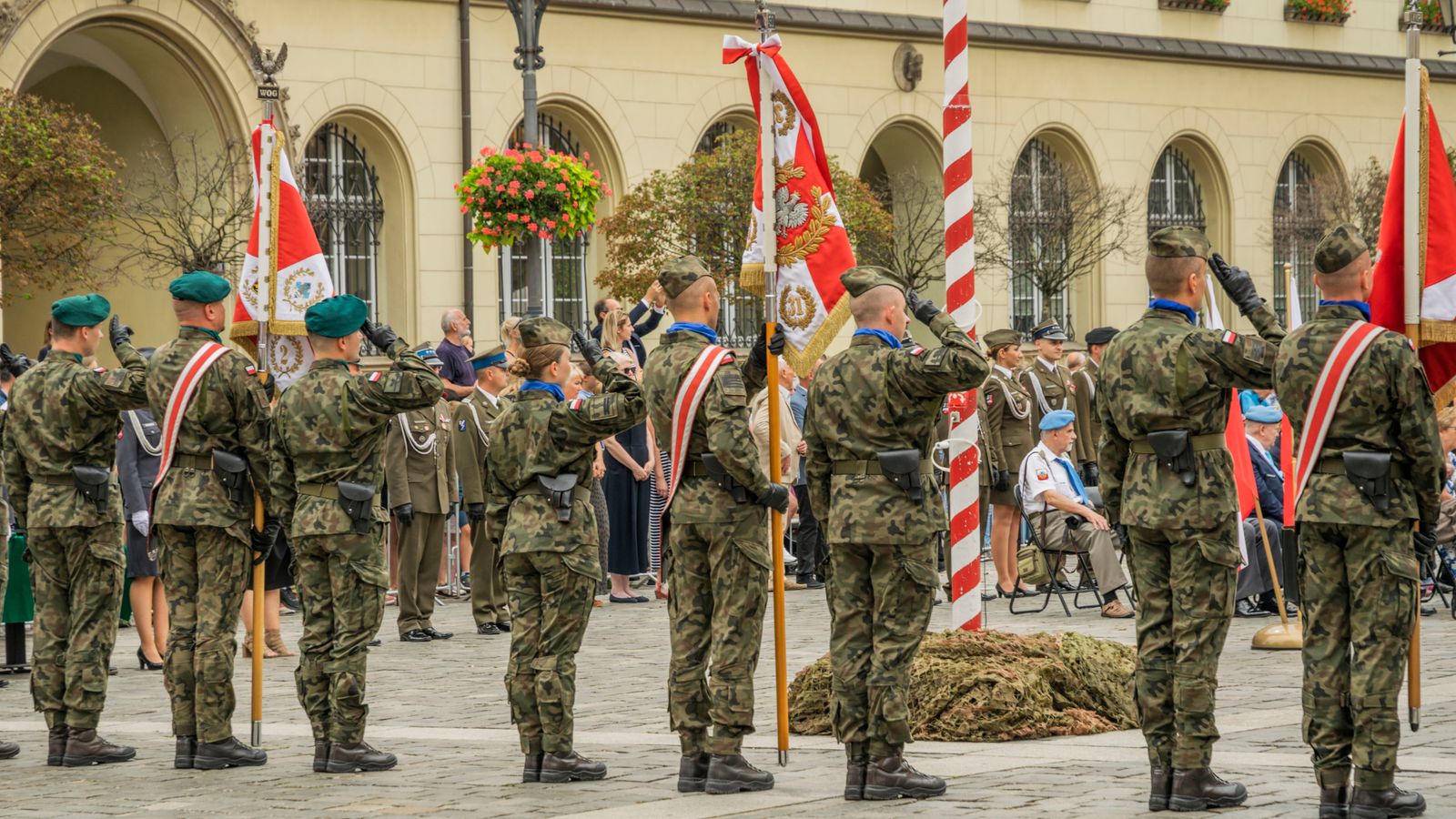
Every day, one story that matters, broken down into three numbered scenarios, each with its own probability. Never fixed — it shifts as the situation changes.
Scénario
Monday, geopolitics
European defense: can Europe manage without the United States?
Can Europe ensure its own defense in the coming years without United States support?
Publié le 12 octobre 2026
Share:
The facts
Since the end of World War II, the security of the European continent has rested on a historic military alliance with Washington. European nations, united within the European Union and NATO, have long delegated a vital share of their protection to the US military. But amid rising geopolitical tensions and political uncertainties in the United States, an urgent question now confronts leaders across the continent: can Europe defend itself against foreign threats, first and foremost Russia? Answering this challenge goes far beyond mere statements of principle, as making up for a potential withdrawal by the world’s leading military power would require colossal resources.
Gauging the scale of the challenge begins with national budgets. According to benchmark economic analyses published by Bruegel and the Kiel Institute, replacing all US forces and equipment deployed to protect Europe would require adding roughly €250 billion a year to current military spending. For European countries as a whole, that would mean raising defense spending from 2.1% to nearly 3.5% of GDP. In concrete terms, such a shift would force Germany to increase its annual military budget from €80 billion to €140 billion, a dramatic surge that upends traditional fiscal balances.
Understanding it
Replacing the US military represents an unprecedented material and human undertaking.
To offset a full withdrawal of US forces, Europe would need to do much more than find €250 billion a year. It would have to recruit 300,000 additional soldiers and manufacture 1,400 main battle tanks alongside 1 million artillery shells annually. This massive undertaking exceeds the current combined industrial capacity of France, Germany, and Italy.
Faced with this reality, European capitals have begun responding institutionally and financially. On May 27, 2025, the European Union officially adopted the SAFE instrument*, a €150 billion joint loan facility designed to finance pooled military equipment purchases among member states. Soon after, on June 25, 2025, at the Hague summit, allied nations set an ambitious goal by pledging to raise their overall defense spending to 5% of GDP by 2035. Germany even amended its constitution in March 2025, lifting its debt brake* for all military expenditures exceeding 1% of GDP.
Yet defending a continent is not just about writing checks or passing budget laws. While money can purchase weapons, European factories face a severe shortage of industrial capacity to quickly produce thousands of armored vehicles, missiles, or millions of large-caliber artillery shells. According to the IISS think tank, simply replacing conventional US military equipment would cost between $226 billion and $344 billion. On top of these massive financial sums come shortages of qualified military personnel, with experts estimating that at least 300,000 additional professional soldiers would need to be recruited and trained to offset the absence of regular US troops on European soil.
The hardest bottleneck to overcome remains technical, technological, and strategic. European militaries rely heavily on Washington for satellite intelligence, advanced airborne surveillance, heavy logistical transport, and the integrated command* of large-scale operations. What is more, the continent’s ultimate security guarantee has rested for decades on the US nuclear umbrella*. While France and the United Kingdom maintain independent nuclear arsenals, their national doctrines do not automatically cover all of Eastern Europe’s borders with the same level of commitment as the US apparatus.
Understanding it
Military technology and intelligence cannot be acquired in a matter of months.
Even with record defense budgets, Europe relies on the United States for its military eyes and ears: spy satellites, aerial refueling, and battlefield data networks. Without the US command structure that coordinates the entire continent, European armed forces resemble soldiers operating without a unified communications network.
The outcome of this massive rearmament effort remains uncertain, as it hinges as much on governments’ political will as on the strength of national defense industries. Do the twenty-seven EU member states share the same vision of security priorities, or will economic rifts hold back joint investments? To shed light on this historic crossroads reshaping our continent’s strategic autonomy*, our newsroom has modeled three detailed forward-looking scenarios, ranging from a successful autonomous European defense pillar to critical vulnerability in the event of a sudden US withdrawal.
EU member state defense spending (2025)€381 billion (approx. 2.1% of GDP) +11% year-on-year
2035 defense spending target (The Hague summit)5% of GDP (3.5% + 1.5%) In progress — review scheduled for 2029
Les chiffres
Trois ordres de grandeur pour mesurer l'enjeu budgétaire européen.
Budget allemand actuel
80 Mds €
Budget allemand cible (3,5 % PIB)
140 Mds €
Instrument SAFE (prêts UE)
150 Mds €
Bruegel/Kiel Institute (mai 2025) ; Conseil de l'UE (27 mai 2025)
Three paths toward military autonomy for the European continent
What we're assessing
FavorableL'Europe finance son autonomie, unifie sa production militaire et bâtit un bouclier commun crédible.
StableLes budgets progressent vers 3,5 % du PIB mais l'Europe conserve des dépendances critiques envers Washington.
DégradéL'effort financier et industriel échoue, laissant le continent sans protection crédible face aux menaces.
Favorable
25%
Unlikely
Europe succeeds in rearming and builds an autonomous military pillar
In this first scenario, European nations successfully mobilize the extra €250 billion per year required to offset the withdrawal of US forces. Governments fully tap the €150 billion SAFE instrument to place massive, standardized orders for aircraft, tanks, and missiles with European manufacturers. This unprecedented political momentum enables the recruitment of 300,000 new professional soldiers, while France and the United Kingdom officially extend their nuclear deterrence guarantees to all Eastern European allies.
Compared with the other two trajectories, this scenario assumes total political cohesion and an industrial ramp-up free of technical bottlenecks or delivery delays. The European Union reshapes its economy to smoothly reach the 5% of GDP target by 2035 set at the Hague summit. This historic qualitative leap would allow the continent to sustainably deter any foreign aggression without relying on election outcomes across the Atlantic.
Indicators affected
Dépenses de défense de l'UE520 milliards d'euros par an↑381 Mds € (2025)
Objectif horizon 2035 (La Haye)Atteinte accélérée dès 2032↑Cible 5 % révisée en 2029
The France angleThe French defense industry becomes the primary engine of European defense and strengthens its diplomatic clout. ↑ Rather favorable for France.
Stable
50%
Likely
Budgets rise, but Europe retains critical dependencies
In this second scenario, European countries significantly ramp up defense spending to roughly 3.5% of GDP, but fall short of the overall 5% target. Member states modernize their ground forces and replenish ammunition stockpiles through pooled procurement, but persistent industrial bottlenecks prevent them from quickly closing gaps in stealth aviation, heavy logistics, and space-based intelligence. Europe strengthens its immediate conventional shield while continuing to rely on US military leadership for overarching coordination.
Unlike a scenario of complete rupture, this middle path preserves an essential operational partnership with Washington while easing the burden on the US military. The €150 billion SAFE instrument delivers tangible yet uneven results across nations, as some capitals continue to prioritize off-the-shelf purchases from American defense contractors. This pragmatic dynamic would help Europe shore up its everyday security without achieving full strategic independence.
Indicators affected
Dépenses de défense de l'UE450 milliards d'euros par an↑381 Mds € (2025)
Objectif horizon 2035 (La Haye)Stabilisation autour de 3,5 % du PIB→Cible 5 % révisée en 2029
The France angleFrance boosts its military budgets but must navigate European partners that still buy American equipment. ↓ Rather unfavorable for France.
Degraded
25%
Unlikely
Financial momentum stalls, leaving Europe vulnerable to US disengagement
In this third scenario, economic constraints and internal political disputes prevent European countries from financing the required €250 billion per year. Skilled labor shortages and scarce raw materials stall the ramp-up of defense manufacturing across the continent. With budgets plateauing near current levels, Europe proves unable to replace the US military equipment valued by IISS experts at between $226 billion and $344 billion, directly undermining the security of eastern border nations.
In stark contrast to proactive rearmament scenarios, this path exposes Europe to a major security crisis if Washington abruptly scales back its military presence within NATO. Political divides between Southern and Eastern European states block new financial solidarity mechanisms once initial SAFE loans run dry. Such military weakness would risk severely eroding European deterrence against external pressure.
Indicators affected
Dépenses de défense de l'UE395 milliards d'euros par an→381 Mds € (2025)
Objectif horizon 2035 (La Haye)Abandon de la cible lors du bilan 2029↓Cible 5 % révisée en 2029
The France angleFrance finds itself isolated amid rising defense costs and heightened geopolitical insecurity along its borders. ↓ Rather unfavorable for France.
Ordres de grandeur indicatifs pour les 3 scénarios ci-dessus, estimés avec l'information disponible à la publication et réévalués si la situation change — jamais des prévisions garanties. Learn more about our method → · How to read a probability →
Key takeaways
Europe is assessing whether it possesses the military, financial, and industrial means to guarantee its own security without relying on US support.
Replacing US military capabilities would require adding €250 billion per year to current European defense budgets (€381 billion in 2025) and mobilizing 300,000 additional troops.
Not entirely in the short term: our baseline scenario (50%) projects that Europe will increase spending toward 3.5% of GDP while retaining critical dependencies on Washington — our other two scenarios model successful autonomy (25%) or a capability stall (25%).
The key milestone will come in 2029 during the official review of investment targets agreed upon by allies at the NATO summit in The Hague.
Somewhat negative
Our assessment of the impact for France: somewhat negative.persistent military dependencies on the United States in the baseline scenario (50%) and the risk of a capability stall (25%) maintain heavy financial and strategic pressure on France’s defense model.
Si tu devais retenir 1 chose
Remplacer l'armée américaine en Europe exigerait 250 milliards d'euros par an en plus et 300 000 soldats supplémentaires selon les experts.
Don't miss the next edition:
For those new to the topic
Quick glossary
SAFE instrument
European financial mechanism adopted in May 2025 providing €150 billion in loans to fund pooled military equipment procurement among member states.
debt brake
German constitutional rule capping public deficits, eased in March 2025 to allow exceptional borrowing dedicated to defense spending.
integrated command
Joint NATO military structure traditionally led by an American general to coordinate allied armed forces in the event of armed conflict.
nuclear umbrella
Security guarantee provided by a nuclear-armed power, primarily the United States within NATO, to shield its allies from major aggression.
strategic autonomy
The ability of European nations to make military decisions and take action on their own, without depending on foreign technologies or authorizations.