Every day, one story that matters, broken down into three numbered scenarios, each with its own probability. Never fixed — it shifts as the situation changes.
Scénario
Friday, science
Water: The next strategic resource?
Between drone strikes on desalination plants in the Middle East, tensions along the Nile and the Indus, and record drought in France: is water becoming a weapon and a global security issue, or can cooperation still prevail?
Publié le 23 octobre 2026
Share:
The facts
The point, in plain terms
Freshwater is growing scarcer due to climate change, while shared rivers and treatment plants are becoming geopolitical targets.
Drinking water and irrigation depend on rivers that frequently cross international borders. With record glacier melt and declining water levels, upstream countries retain water for their dams, directly threatening downstream nations. In the Middle East, desalination plants have even been targeted by drones. This issue determines food security, harvest prices, and international political stability.
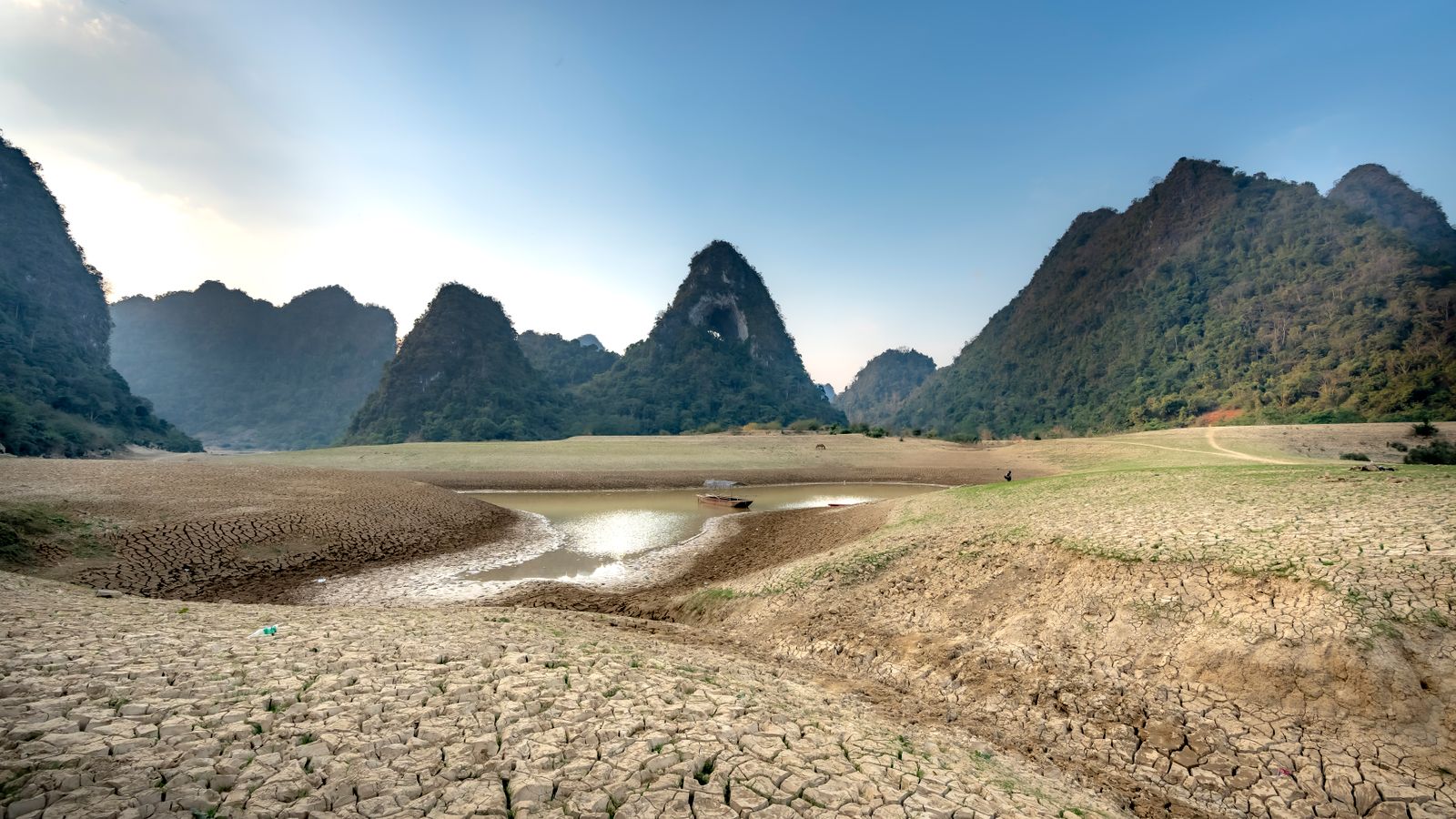
Freshwater is like a natural savings account that the planet is gradually draining without being able to replenish it. According to a report by the World Meteorological Organization* published in autumn 2026, 2025 stood out as one of the driest years in the past thirty-five years. No fewer than 36% of the world’s river basins recorded discharge levels well below their normal average. At the same time, land glaciers melted at an alarming pace, with a cumulative mass loss reaching 1,400 gigatons of water in just three years. This physical scarcity parches soils and directly jeopardizes both electricity generation and agricultural harvests.
This climate stress is now colliding with a burning geopolitical reality: over 60% of the world’s freshwater courses cross at least one international border. When a river flows from one country to another, the upstream neighbor holds immense leverage over the downstream state. Freshwater is no longer merely a matter of weather or daily environmental concern. It is becoming a tool of diplomatic pressure, or even military blackmail, between rival nations. Shared rivers and water treatment plants are now at the center of national security calculations.
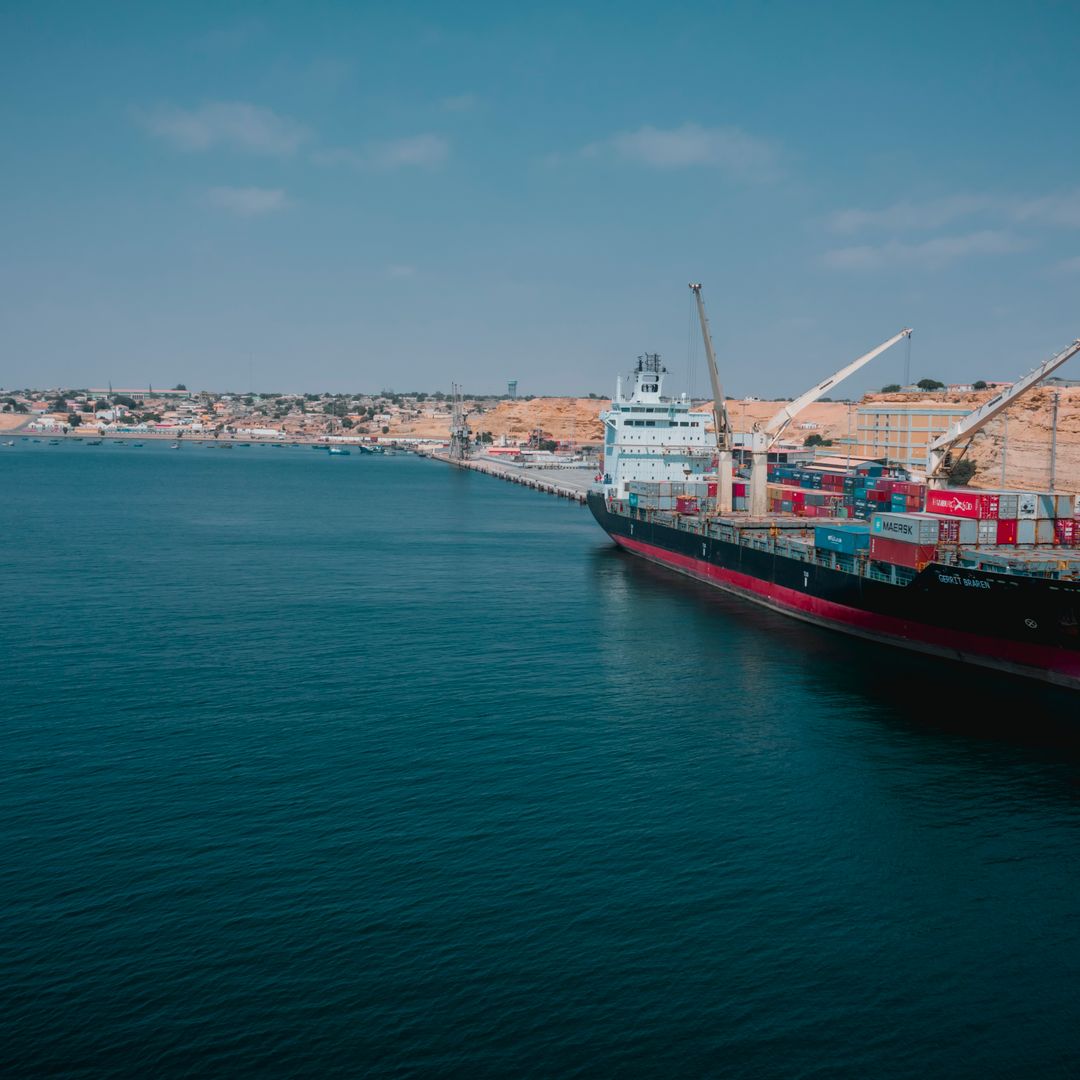
In the Middle East, a critical threshold was crossed in March 2026 when drone strikes directly targeted desalination plants* in Bahrain and on the Iranian island of Qeshm. In this desert region, which accounts for two-thirds of global seawater desalination capacity, such infrastructure is vital. Kuwait, for instance, relies on desalination for 93% of its tap water supply. Striking these facilities amounts to cutting off running water for millions of civilians in mere minutes, turning industrial infrastructure into a target of war.
Understanding it
Why has seawater desalination become a priority military target?
In arid Gulf countries, drinking water does not come from underground aquifers but from massive plants that remove salt from seawater. These complex facilities run around the clock powered by gas and electricity. If drones destroy these installations, entire metropolitan areas could be left without a drop of drinking water within hours, with no immediate backup solution.
In South Asia, one of the world’s oldest diplomatic agreements is teetering dangerously. The Indus Waters Treaty*, signed in 1960 between India and Pakistan, had governed the peaceful sharing of the river system despite multiple open wars. But following New Delhi’s unilateral suspension of the pact, Pakistani Prime Minister Shehbaz Sharif formally warned in October 2026 that any tampering with water flows by India would constitute an act of war. For Islamabad, the river irrigates 80% of the country’s cultivated land and is crucial to feeding its population.
Understanding it
How did an agreement signed in 1960 over the Indus River become a red line?
The Indus Waters Treaty allocates the management of three rivers to Pakistan and three to India. Pakistan relies on this water flow to feed its population. When India builds new upstream dams and freezes dialogue, Islamabad views it as an existential threat capable of drying up its fields, treating any water cut-off as a declaration of war.
On the African continent, the Nile River is the focal point of a similar confrontation between Egypt and Ethiopia. The commissioning of the massive Grand Ethiopian Renaissance Dam* by Addis Ababa led to tit-for-tat expulsions of diplomats in early October 2026. Egypt, which relies exclusively on the Nile for 95% of its water needs, fears its agriculture could be crippled during drought years. To bypass this deadlock, Cairo retaliated on October 14, 2026, by financing 36 water infrastructure projects in upstream neighboring countries, seeking alliances to safeguard its vital flow.
Even temperate nations are now experiencing this growing water stress*. In France, as of October 13, 2026, 95 administrative departments were subject to water restrictions, with 79 departments at maximum crisis level. Freshwater scarcity everywhere requires painful trade-offs between household consumption, crop irrigation, and power plant cooling. As the UN 2026 Water Conference is set to open in Abu Dhabi from December 8 to 10, 2026, the international community faces a decisive choice: will blue gold spark new armed conflicts, or serve as a catalyst for renewed global solidarity?
French departments in drought crisis79 departments out of 95 under restrictions in mid-October 2026
Share of global freshwater crossing borders60% subject to rivalries between neighboring states
Cumulative glacier mass loss (2023–2025)1,400 gigatons according to the 2026 WMO global report
Les chiffres
Départements français en niveau crise sécheresse, mi-octobre
2024
22 départements
2025
53 départements
2026
79 départements
Source : Eaufrance, bulletins nationaux de situation hydrologique (2024-2026)
Three scenarios for the future of global blue gold
What we're assessing
FavorableUn accord diplomatique à Abu Dhabi encadre le partage des fleuves et sanctuarise les usines d'eau.
StableLes tensions diplomatiques et les restrictions d'eau restent permanentes sans dégénérer en conflit militaire.
DégradéUne coupure d'eau volontaire ou une frappe sur un barrage déclenche une riposte armée régionale.
Favorable
20%
Unlikely
Water diplomacy prevails at the Abu Dhabi summit
First scenario: the international community uses the UN world summit in Abu Dhabi in December 2026 to establish an unprecedented protection framework. Facing the risk of wider conflict, Egypt and Ethiopia accept African mediation to establish mandatory minimum flows on the Nile. India resumes bilateral meetings with Pakistan under World Bank supervision, guaranteeing access to the Indus waters. Major powers formally agree to prohibit military strikes against desalination plants and civilian dams.
Unlike the other two scenarios where scarcity dictates power dynamics, this outcome turns water shortages into a catalyst for regional cooperation. Massive investments in water recycling and agricultural irrigation modernization help curb waste without harming downstream populations. Diplomatic de-escalation significantly lowers the risk of spikes in global food prices, even though underlying climate stress continues to weigh on natural reserves.
Indicators affected
Départements en crise sécheresse45 départements↓79 en 2026
Eau transfrontalière sous tension35 %↓60 %
Perte de masse glaciaire annuelle350 Gt/an→466 Gt/an
The France angleFrance secures its food imports and exports water engineering technologies. ↑ Rather favorable for France.
Stable
45%
Likely
A blue gold Cold War without direct military clash
Second scenario: riparian states remain in a state of permanent confrontation but avoid open military conflict. India continues building hydroelectric dams without officially declaring a final break from the Indus treaty, while Pakistan ramps up legal challenges. Along the Nile, Egypt and Ethiopia continue to exchange diplomatic barbs and finance rival projects without any shots being fired. Gulf desalination plants bolster their air defenses against drone threats.
This high-tension status quo differs from diplomatic easing by maintaining heavy, long-term economic uncertainty. States allocate massive budgets to securing canals and facilities instead of investing in the ecological transition. In Europe and France, recurring droughts impose chronic irrigation restrictions from summer through late autumn, forcing agricultural sectors to reduce output without triggering widespread panic.
Indicators affected
Départements en crise sécheresse75 départements→79 en 2026
Eau transfrontalière sous tension60 %→60 %
Perte de masse glaciaire annuelle480 Gt/an↑466 Gt/an
The France angleChronic water restrictions weigh on French agriculture and power plants. ↓ Rather unfavorable for France.
Degraded
35%
Likely
Water weaponization sparks regional armed strikes
Third scenario: a major incident pushes water competition into open armed conflict. A contested upstream reservoir on the Indus prompts the Pakistani military to launch retaliatory strikes against Indian infrastructure. In the Middle East, a coordinated drone strike destroys a major desalination plant, cutting off drinking water to a Gulf capital and triggering an emergency urban exodus. Along the Nile, sabotage targets the Ethiopian dam’s power installations, unleashing regional armed reprisals.
This tragic turning point decisively breaks with the status quo, turning water into an indirect weapon of mass destruction. The destruction of hydraulic networks ruins harvests on a large scale, triggering global food shortages and massive climate refugee displacement. On world markets, grain and basic commodity prices surge sharply, destabilizing importing economies and weakening international supply security.
Indicators affected
Départements en crise sécheresse88 départements↑79 en 2026
Eau transfrontalière sous tension85 %↑60 %
Perte de masse glaciaire annuelle520 Gt/an↑466 Gt/an
The France angleSharp surge in food prices and major geopolitical shock to national supply chains. ↓ Rather unfavorable for France.
Ordres de grandeur indicatifs pour les 3 scénarios ci-dessus, estimés avec l'information disponible à la publication et réévalués si la situation change — jamais des prévisions garanties. Learn more about our method → · How to read a probability →
Key takeaways
Between drone attacks on desalination plants in the Middle East and disputes along the Nile and the Indus, access to freshwater is becoming a military security issue for many nations.
The planet lost 1,400 gigatons of ice in three years, and 79 French departments reached maximum drought crisis level by mid-October 2026.
Our most likely scenario (45%) projects that countries will maintain a tense hydraulic Cold War without sliding into direct armed conflict — compared to the alternatives of international cooperation (20%) or open military escalation (35%).
Signal to watch: resolutions from the UN Water Conference in Abu Dhabi on December 8–10, 2026, regarding the protection of civilian infrastructure.
Moderately negative
Our assessment of the impact for France: moderately negative.with an 80% cumulative probability of deadlock or armed escalation scenarios, France faces prolonged strain on its harvests and higher global agricultural commodity prices.
Si tu devais retenir 1 chose
Avec 79 départements en crise sécheresse en France et 1 400 gigatonnes de glaciers perdus en trois ans, l'eau devient un levier géopolitique sous haute tension.
Don't miss the next edition:
For those new to the topic
Quick glossary
World Meteorological Organization
Specialized agency of the United Nations responsible for monitoring the planet’s atmosphere, climate, and water resources.
desalination
Industrial process that removes salt from seawater to make it suitable for human consumption and agriculture.
Indus Waters Treaty
Diplomatic agreement signed in 1960 governing the sharing of the six rivers of the Indus basin between India and Pakistan.
Grand Ethiopian Renaissance Dam
Massive hydroelectric dam built by Ethiopia on the Blue Nile, disputed by Egypt over concerns regarding downstream flow.
water stress
Critical situation where human and agricultural water demand exceeds the available natural resources in a region.