Every day, one story that matters, broken down into three numbered scenarios, each with its own probability. Never fixed — it shifts as the situation changes.
Scénario
Friday, science
Robotics: Will robots really enter our daily lives?
Will multi-purpose domestic robots be available and adopted in French households by the end of 2026?
Publié le 6 novembre 2026
Share:
The facts
The point, in plain terms
Humanoid robots promise to free us from household chores, but their cost and safety concerns are slowing their rollout.
Manufacturers are opening pre-orders for robots capable of tidying up or folding laundry. However, these machines cost as much as a new car and still make handling errors. For our households, nothing changes in the immediate term: daily chores remain manual, but these early models test the safety of our future home appliances.
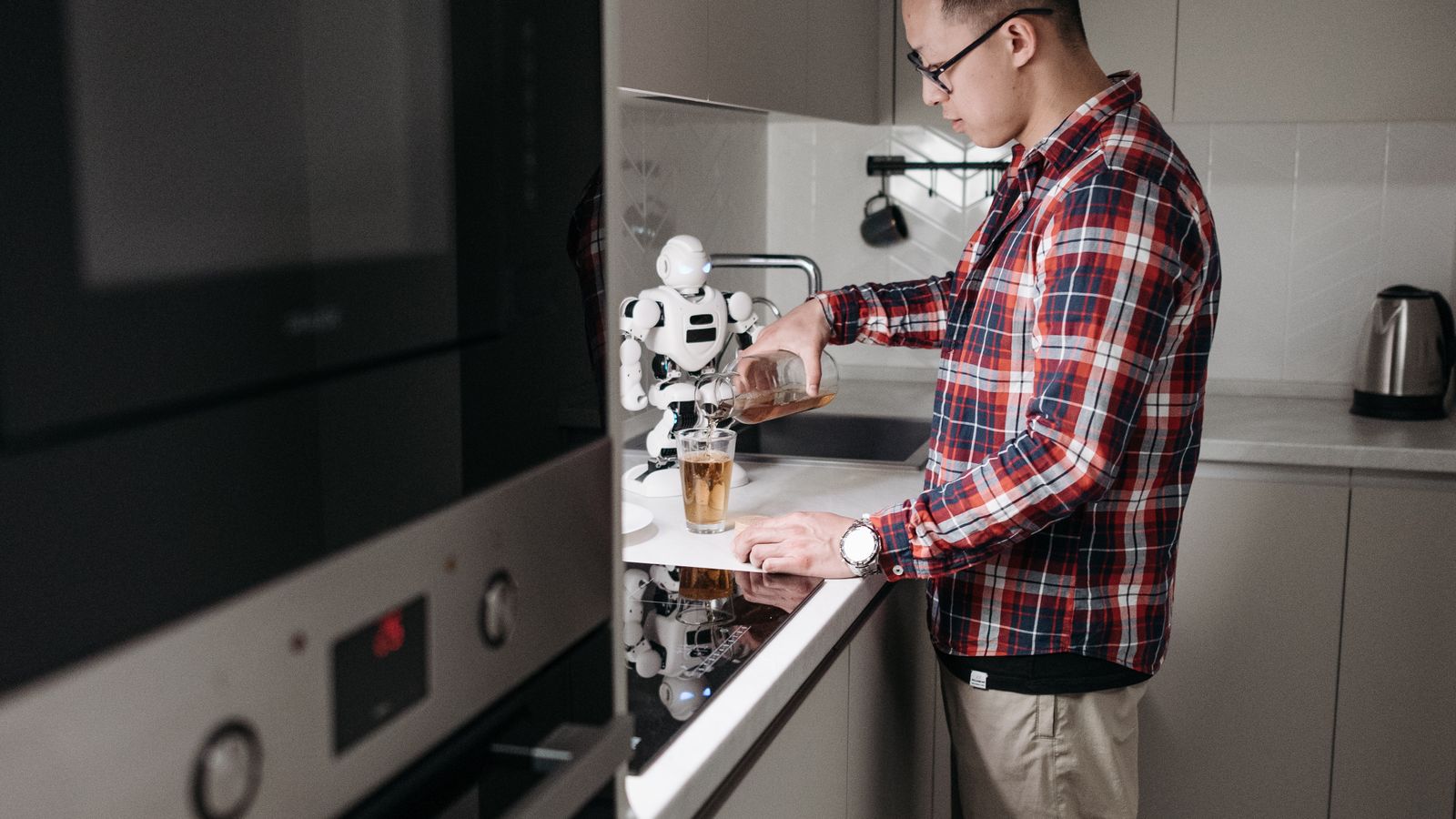
Videos showing humanoid machines folding towels, brewing coffee, or unloading dishwashers are flooding social media. Yet crossing the threshold of our homes remains a colossal technical challenge for modern engineering. In 2025, the global consumer service robotics market reached $19.15 billion, with projections forecasting $24.42 billion in 2026. But this spectacular growth is still driven by single-task, specialized devices like robotic vacuum cleaners or smart lawnmowers, which alone account for over 40% of this commercial segment. Truly versatile multi-purpose robots, capable of stringing together multiple distinct chores in a cluttered living room without human help, remain an emerging industrial promise.
However, 2026 marks an unprecedented surge in commercial announcements. Norwegian company 1X opened pre-orders for its bipedal robot named NEO, priced at $20,000 per unit or through a monthly subscription of $499 per month. The startup already claims more than 10,000 pre-orders and promises initial deliveries in the United States before the end of the year. At the same time, US-based Figure AI unveiled its Figure 03 model, while Asian tech giants LG and SwitchBot showcased their own robotic-arm prototypes at the Las Vegas tech show—named CLOiD and Onero H1, respectively—designed to fold laundry or put away dishes.
Behind these metallic frames, the true breakthrough comes from artificial intelligence software. Traditional robots had to memorize every millimeter of a room to avoid tripping over a coffee table. In September 2026, Figure AI introduced Helix 2.5, a model capable of zero-shot generalization*. Thanks to this technology, a machine can enter an entirely unfamiliar home and perform three household chores without prior training. This model operated in thirty separate American households, instantly adapting its posture and movements to the furniture it encountered, bringing the machine closer to genuine practical autonomy in daily life.
Understanding it
Why our homes are harder to conquer than factories
In an automotive plant, every part arrives with millimeter precision on a fixed track. In a living room, a toy lies on the floor, a rug slips, and the lighting changes. A robot must constantly improvise without breaking anything.
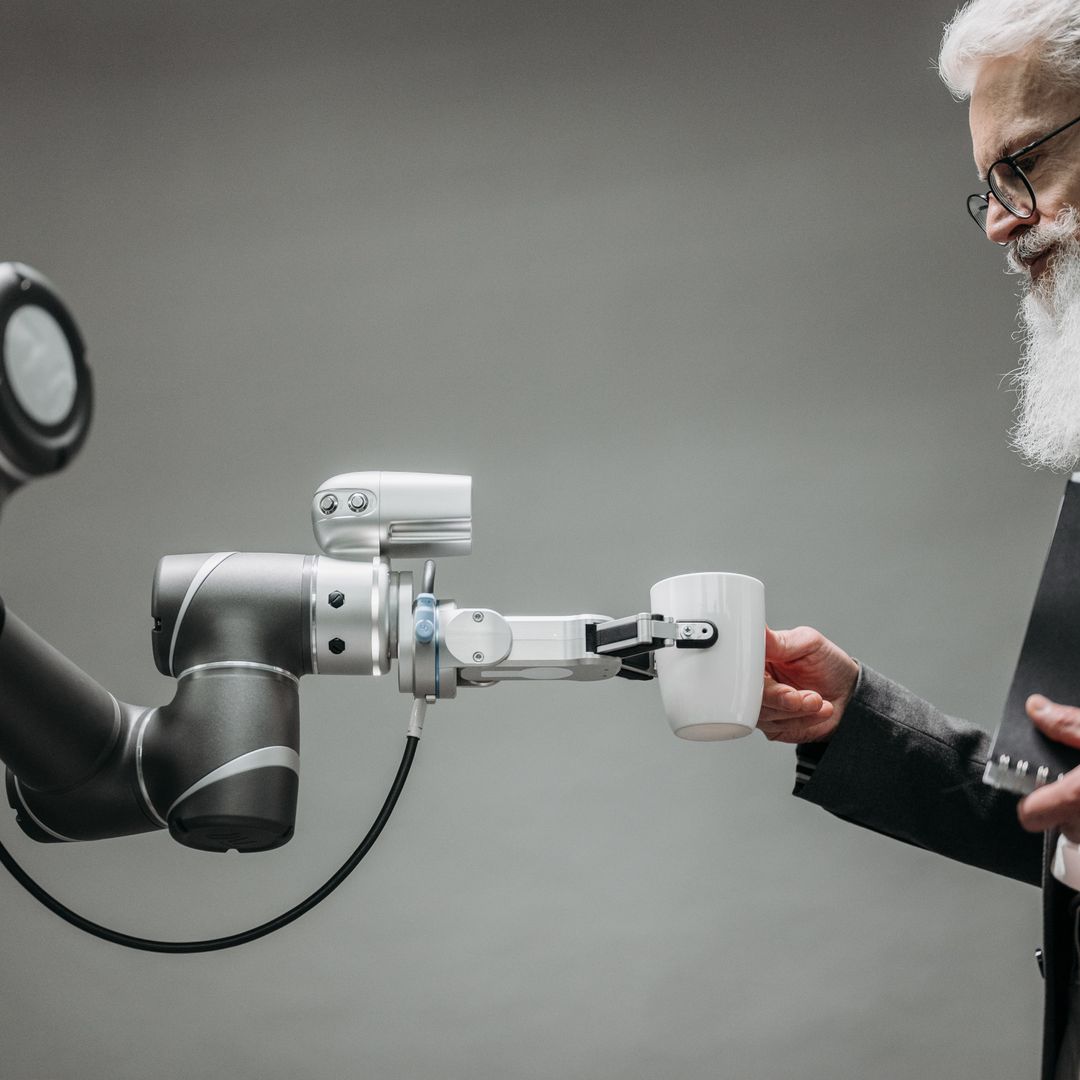
Despite these laboratory advances, the International Federation of Robotics* (IFR) notes that major hurdles still block widespread adoption. For a family to hand over their keys to a robot, the device must guarantee robust handling of fragile items, intuitive programming without technical jargon, and pricing within reach of an average household budget. Above all, many current robots still rely on teleoperation* by remote human technicians whenever an unforeseen situation arises. This human intervention raises sensitive privacy and personal data protection concerns within the home.
Understanding it
The delicate trade-off between autonomy and human teleoperation
When a robot hesitates in front of a cupboard, a human operator sometimes takes remote control. This gets the machine moving again, but brings cameras monitored by a third party straight into the privacy of a bedroom.
In France, the overall service robotics market represents €1.1 billion in 2026, but multi-purpose humanoids remain entirely absent from everyday life. French households have historically maintained a cautious approach to new home appliances. In the mid-2010s, barely 2% of French households owned a basic robotic vacuum cleaner, while more sophisticated greeting robots like Pepper were eventually pulled from industrial production due to a lack of proven practical use. Strict European safety standards and the General Data Protection Regulation also complicate the direct import of technologies developed in North America or Asia.
The arrival of domestic robots in our homes by the end of 2026 therefore does not depend solely on chip performance. It runs up against purchasing power constraints, the real-world reliability of mechanical movements, and social acceptance regarding mobile cameras continuously roaming living spaces. As manufacturers’ announced deadlines approach December 31, 2026, industry experts see a major crossroads. The technology could either begin pioneering adoption among wealthy households, remain confined to controlled demonstrations, or suffer technical and regulatory delays pushing practical home use much further into the future.
Global consumer service robotics market$19.15B (2025); $24.42B (2026 projected) 2026 projection up sharply, over 40% dominated by specialized robots
Pre-orders for the NEO domestic robot (1X)over 10,000 pre-orders Price: $20,000 purchase or $499/month, initial deliveries announced for late 2026
Les chiffres
Coût et marché : deux barrières à l'adoption des robots domestiques polyvalents
Prix NEO (achat)
20 000 $ (achat)
Abonnement NEO
499 $/mois
Marché mondial 2025
19,15 milliards $ (2025)
Sources : 1X ( NEO Home Robot ), JournalduNet ( marché robots de service 2025-2026 ), données vérifiées le 2026-11-06
Three paths for the arrival of multi-purpose robots in our homes
What we're assessing
FavorableLes livraisons démarrent aux États-Unis et une minorité de ménages pionniers français s'équipe.
StableLes robots restent un produit de luxe expérimental et les aspirateurs spécialisés dominent le marché.
DégradéLes retards techniques et les blocages sur la vie privée repoussent toute adoption grand public.
Favorable
25%
Unlikely
Successful rollout for early adopters and initial adoption among wealthy households
In this first scenario, manufacturers successfully clear the industrialization hurdle before December 31, 2026. 1X fulfills its initial US deliveries to early NEO buyers, while Figure AI opens consumer pre-orders for its Figure 03 model. Powered by AI architectures like Helix 2.5, these machines handle basic chores without major issues. In France, a handful of wealthy households, tech enthusiasts, and families seeking home assistance import these models or sign up for monthly subscriptions to offload tidying up or doing the dishes.
Compared to stagnation or deadlock, this trajectory relies on a rapid drop in manufacturing costs and full compliance with physical safety standards. The demonstrations showcased at CES 2026 by LG and SwitchBot quickly evolve into certified commercial products for the European market. However, the financial barrier remains substantial for most people, restricting this wave to a very narrow audience. If early feedback proves compelling, this pioneer adoption could gradually pave the way for the broader democratization of domestic robots in the years ahead.
Indicators affected
Marché mondial des robots de service grand public26,0 milliards $ en 2026↑24,42 milliards $ initialement projetés
Précommandes du robot domestique NEO (1X)plus de 25 000 unités réservées↑plus de 10 000 précommandes initiales
The France angleA few hundred wealthy French households import these early multi-purpose assistants. ↑ Somewhat favorable for France.
Stable
55%
Fairly likely
Technology restricted to an expensive niche and dominance of specialized devices
In this baseline scenario, multi-purpose domestic robots do hit the market but remain confined to a niche audience. The $20,000 price tag for NEO and the $499 monthly fee deter virtually all average households. Furthermore, the machines still require frequent remote teleoperation by humans to adjust their paths in complex rooms, running afoul of European privacy regulations. In France, the €1.1 billion market remains almost entirely composed of specialized vacuums and mowers, while humanoids stay confined to trade-show demonstrations.
Unlike a rapid commercial breakthrough or complete technological failure, this path reflects the historically slow adoption cycle of major home appliances. Manufacturers sell their initial batches to research labs, showcase corporate clients, or a handful of wealthy US buyers, while postponing mass commercialization in Europe beyond 2027. The promise of a versatile machine cleaning the entire house remains an evolving technical horizon rather than an everyday reality. Mass domestic adoption would thus slide toward the end of the decade, allowing time to reduce costs and enhance software reliability.
Indicators affected
Marché mondial des robots de service grand public24,42 milliards $ en 2026→24,42 milliards $ projetés (tirés par les aspirateurs)
Précommandes du robot domestique NEO (1X)12 000 unités avec livraisons étalées→plus de 10 000 précommandes initiales
The France angleThe French market remains focused on autonomous vacuums with no breakthrough for humanoids. ↓ Somewhat unfavorable for France.
Degraded
20%
Unlikely
Industrial delays, reliability issues, and a freeze on domestic deployments
This third scenario sees manufacturers hit insurmountable technical snags in uncontrolled, real-world environments. AI models fail to ensure safe handling of everyday objects, leading to dropped items, hardware lockups, and collision risks in narrow hallways. Faced with legal uncertainties regarding civil liability and the risk of video feed breaches, regulators tighten certification requirements. Promised late-2026 deliveries are officially postponed, echoing the premature withdrawal of companion robots like Pepper.
Unlike the stable scenario where devices function within costly constraints, this outcome marks a sharp halt to investments in consumer home robotics. Startups in the sector pivot their humanoids to industrial logistics and closed warehouses, where tasks are standardized and humans are kept at a safe distance. For French households, the dream of an all-around home assistant tidying the living room fades for the foreseeable future. The personal robotics sector could then enter a prolonged commercial winter due to a lack of profitability and technical maturity.
Indicators affected
Marché mondial des robots de service grand public21,0 milliards $ en 2026↓24,42 milliards $ initialement projetés
Précommandes du robot domestique NEO (1X)moins de 5 000 livraisons réelles (annulations)↓plus de 10 000 précommandes initiales
The France angleTotal absence of domestic humanoids and heightened skepticism among French consumers. ↓ Somewhat unfavorable for France.
Ordres de grandeur indicatifs pour les 3 scénarios ci-dessus, estimés avec l'information disponible à la publication et réévalués si la situation change — jamais des prévisions garanties. Learn more about our method → · How to read a probability →
Key takeaways
Will multi-purpose domestic robots be available and adopted in French households by the end of 2026?
The global consumer robotics market is projected to reach $24.42 billion in 2026, but over 40% remains dominated by vacuums, while the NEO model carries a $20,000 price tag.
No, our most likely scenario (55%) projects that humanoids will remain an expensive, experimental niche—compared to 25% for early adoption and 20% for a technical freeze.
Key early signal to watch: confirmation of the first actual deliveries of 1X’s NEO robot to US consumers before December 31, 2026.
Somewhat negative
Our assessment of the impact for France: somewhat negative.the lack of affordable, EU-compliant offerings deprives French households of relief from daily chores, while maintaining total dependence on foreign manufacturers.
Si tu devais retenir 1 chose
Avec un prix de 20 000 dollars l'unité pour le robot NEO, les humanoïdes polyvalents resteront hors de portée des foyers français en 2026.
Don't miss the next edition:
For those new to the topic
Quick glossary
zero-shot generalization
The ability of an artificial intelligence model to perform a task in a completely unfamiliar environment without prior training on that specific location.
International Federation of Robotics
A global trade organization that compiles production statistics, analyzes technological trends, and assesses barriers to the adoption of industrial and service robots.
teleoperation
A remote-control system where a human operator directly pilots a robot via sensors and cameras whenever it encounters an unforeseen obstacle.