Every day, one story that matters, broken down into three numbered scenarios, each with its own probability. Never fixed — it shifts as the situation changes.
Scénario
Thursday, global economy & finance
Nvidia: will Jensen Huang’s resignation burst the AI bubble?
Does the resignation of Nvidia CEO Jensen Huang mark the beginning of the end for the AI stock market bubble, or will markets stabilize?
Publié le 19 novembre 2026
Share:
The facts
The point, in plain terms
The sudden departure of Nvidia’s chief executive threatens to shake record stock market valuations across the artificial intelligence sector.
Nvidia manufactures the core semiconductor hardware powering global artificial intelligence infrastructure. The unexpected exit of CEO Jensen Huang triggered a 14% drop in the company’s share price within hours. The key debate centers on whether this represents a fleeting leadership crisis or the onset of a wider market correction. The outcome carries direct consequences for institutional savings and digital technology firms whose capital investments rely on market stability.
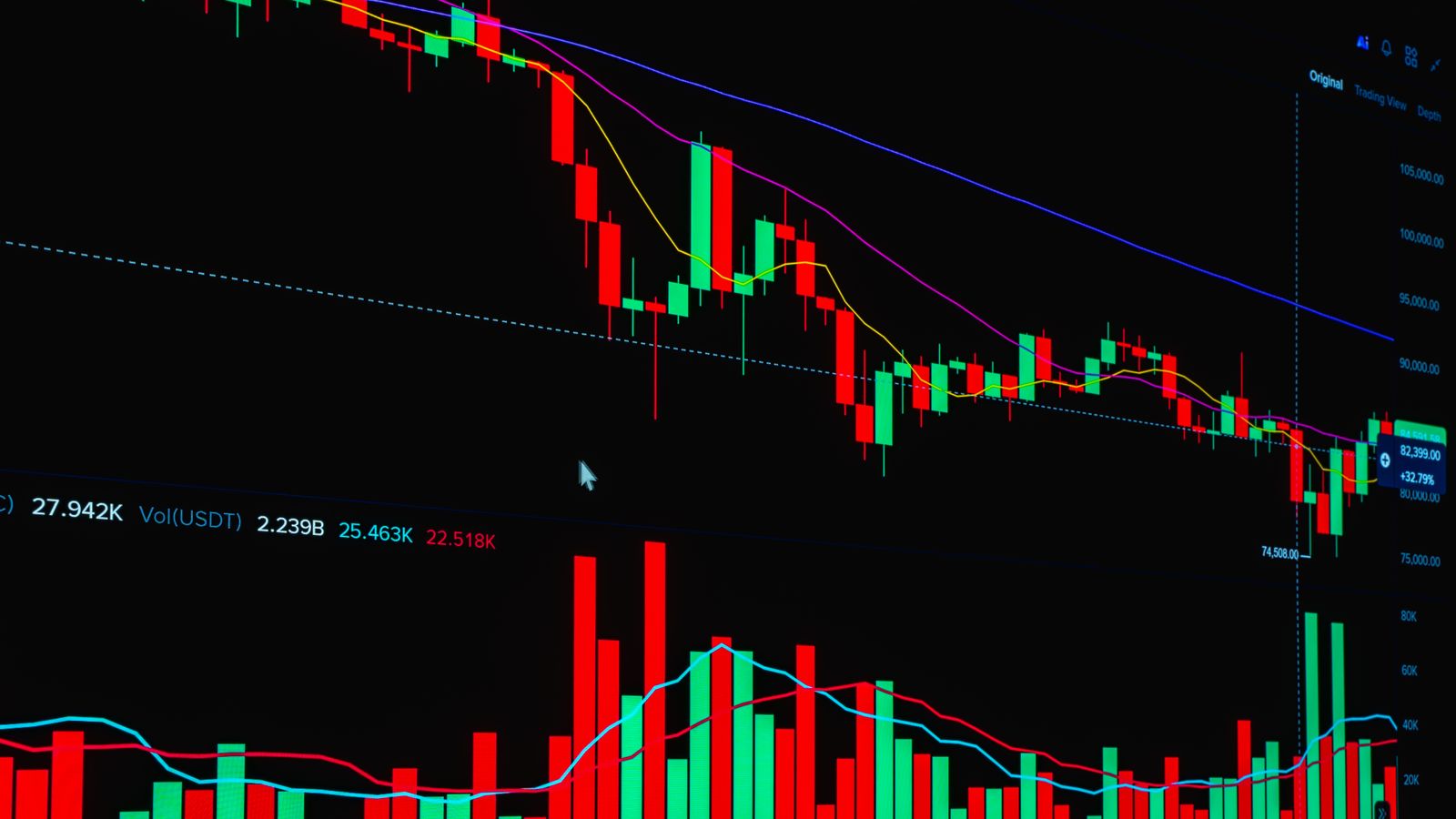
The sudden departure of Jensen Huang on November 12, 2026 sent an immediate shockwave through global financial markets. As Nvidia’s co-founder and long-standing leader for thirty-three years, he embodied the generative artificial intelligence revolution single-handedly. His abrupt resignation, triggered by revelations regarding personal relationships including ties to an alleged Chinese operative, caught investors entirely off guard. Shares of the American semiconductor giant immediately plunged 14% in a single session, dragging Wall Street’s major stock indices down with it and shaking confidence across the tech sector.
This steep drop accelerates an erosion that had already begun several weeks earlier. At its peak on October 6, 2026, Nvidia reached a record market capitalization* of $5.79T, the highest corporate valuation ever recorded in economic history. Following the announcement of its leader’s departure, this valuation* retreated to roughly $4.01T. In less than two months, the company saw nearly $1.8T in paper wealth vanish—a net loss equivalent to the entire gross domestic product of a major European industrial power.
Understanding it
Why does Nvidia’s share price sway the entire global stock market?
Nvidia accounts for a massive weighting in major US stock indices. When the company loses 10% of its value, passive index funds worldwide decline automatically, prompting asset managers to sell other equity holdings to rebalance portfolios.
Nvidia’s outsized market footprint explains the scale of the panic. The company does not merely manufacture consumer hardware: it produces the graphics processing units essential to training the world’s most powerful artificial intelligence models. Its primary clients, ranging from software giants to data center operators, have committed hundreds of billions of dollars to infrastructure spending. When such a vital pillar wavers at the top, the entire value chain is forced to question the sustainability of its capital expenditure and the long-term returns on deployed technologies.
The broader financial backdrop had already left markets on edge. High interest rates maintained by the Federal Reserve heavily weigh on tech companies relying on debt to finance server acquisitions. Meanwhile, geopolitical tensions between Washington and Beijing over sensitive semiconductors* heighten scrutiny over potential security breaches. In this tense climate, analysts are divided: some view the resignation as a straightforward internal governance issue, while others see it as the trigger for a broader market correction.
The fundamental question is whether a financial bubble* is on the verge of bursting. Since late 2022, tech equity prices have surged at a breakneck pace, frequently outstripping underlying revenue growth. Institutional investors*, such as major pension funds and investment banks, are increasingly questioning whether the profits promised by automation justify current valuation levels. If corporations pull back on hardware orders, the stock market’s primary growth engine over the past two years could stall abruptly.
Understanding it
How does a financial bubble develop in emerging technologies?
A bubble forms when investors price shares based on aggressive long-term growth forecasts rather than present-day cash flows. If doubts emerge regarding real-world adoption rates, a rush to exit positions triggers an abrupt price drop.
The sector’s near-term outlook remains highly unpredictable. Chief Financial Officer Colette Kress has stepped in as interim CEO and must present critical quarterly earnings in an unprecedented climate of skepticism. Three potential outcomes emerge for the coming months: a swift absorption of the shock backed by strong order backlogs, prolonged stagnation driven by capital rotation, or a severe market downturn with ripple effects across global bourses.
Nvidia market capitalization (October 2026 peak)$5.79T All-time high reached on October 6, 2026
Nvidia market capitalization (post-resignation)$4.01T -$1.78T from October peak
Les chiffres
La capitalisation de Nvidia a perdu l'équivalent de plus de 1,78 trillion de dollars en moins de deux mois.
Pic octobre 2026
5,79 billions $
Après démission (12 nov.)
4,01 billions $
Perte totale
1,78 billion $ perdu
Sources : CNBC, Yahoo Finance — données du 6 octobre et 12 novembre 2026
Three market trajectories following the Nvidia shock
What we're assessing
FavorableLa demande de puces reste intacte et stabilise rapidement le secteur.
StableLes valorisations ralentissent sans provoquer de krach généralisé.
DégradéLa défiance se propage et déclenche une vente panique des actions tech.
Favorable
30%
Likely
The incident remains contained and strong fundamentals reassure markets
First scenario: financial markets treat Jensen Huang’s departure as an isolated leadership issue with no impact on industrial output. In practice, orders for data center GPUs continue to pour into partner foundries at an uninterrupted pace. Interim leadership delivers robust quarterly earnings, posting annual revenue growth near 90%, dispelling concerns over slowing enterprise adoption. Investors halt panic selling, and the stock stages a technical rebound over the following weeks.
This trajectory assumes that major customers maintain their infrastructure deployment schedules despite the leadership shakeup. Unlike contraction or systemic crisis scenarios, this outcome relies on the fact that Nvidia’s technological moat remains out of reach for direct competitors in the near term. The managerial transition would thus conclude swiftly without denting operational profitability across the sector.
Indicators affected
Capitalisation boursière Nvidia (pic octobre 2026)5,79 billions $→5,79 billions $
The France angleFrench savings funds exposed to US tech recover their initial losses. ↑ Rather favorable for France.
Stable
45%
Likely
Valuations compress without triggering a systemic collapse
Second scenario: Nvidia’s decline marks the end of market euphoria without setting off a broad crash. Major asset managers trim exposure to the stock and rotate capital toward other tech players or traditional value equities with clearer near-term yields. Stock prices cease their parabolic ascent and enter a prolonged consolidation phase, while return-on-investment benchmarks for software initiatives face significantly tighter scrutiny.
This middle-ground path differs sharply from a rapid rebound or widespread market turmoil by establishing a new financial regime. Stretched valuations are reeled in through an orderly re-pricing, limiting collateral damage to the broader economy while dampening speculative funding. The artificial intelligence sector transitions toward greater maturity, becoming less reliant on the statements of a single high-profile executive.
Indicators affected
Capitalisation boursière Nvidia (pic octobre 2026)5,79 billions $→5,79 billions $
The France angleValuations for French AI startups cool down without halting their ongoing projects. ↓ Rather unfavorable for France.
Degraded
25%
Unlikely
Panic selling triggers a severe correction across the entire tech sector
Third scenario: the Jensen Huang fallout exposes an unsustainable bubble, prompting widespread capital flight. Revelations regarding potential intellectual property leaks to China spark aggressive congressional inquiries and tighter export curbs on critical components. Enterprise clients, already burdened by borrowing costs, scale back server orders, triggering downward earnings revisions across Big Tech.
Compared to the other two paths, this scenario transforms a governance mishap into a full-blown crisis of confidence across global equities. Heavy losses in tech equities compel funds to liquidate liquid, unrelated holdings, dragging down European markets and freezing global venture capital. Financing for early-stage technology ventures enters an extended multi-quarter slump.
Indicators affected
Capitalisation boursière Nvidia (pic octobre 2026)5,79 billions $→5,79 billions $
The France angleFrench retail investors face notable valuation drops in their equity-linked life insurance portfolios. ↓ Rather unfavorable for France.
Ordres de grandeur indicatifs pour les 3 scénarios ci-dessus, estimés avec l'information disponible à la publication et réévalués si la situation change — jamais des prévisions garanties. Learn more about our method → · How to read a probability →
Key takeaways
Will the sudden resignation of Nvidia CEO Jensen Huang pop the artificial intelligence market bubble, or can the sector absorb the shock?
Nvidia shares sank 14% on November 12, 2026 following personal revelations, bringing total market capitalization losses to nearly $1.8T since its October peak.
Our baseline scenario (45%) points to a soft landing with cooling valuations, avoiding both a full-blown crash (25%) and an immediate rebound (30%).
Key indicators to watch include Nvidia’s quarterly earnings release and forward guidance from major cloud and server operators.
Slightly negative
Our assessment of the impact for France: slightly negative.as the combined 70% probability of market stagnation or contraction weighs on unit-linked savings invested in global equities and slows funding rounds for French startups.
Si tu devais retenir 1 chose
La capitalisation de Nvidia est tombée à 4,01 billions de dollars après la démission de son PDG, effaçant près de 1 800 milliards de dollars depuis son pic d'octobre 2026.
Don't miss the next edition:
For those new to the topic
Quick glossary
market capitalization
Total market value of a publicly traded company’s outstanding shares, calculated by multiplying the share price by the total number of shares in circulation.
valuation
Financial estimate of a company’s worth at a given point in time, based on its stock price, financial statements, or revenue growth outlook.
semiconductors
Electronic components, commonly known as chips or microprocessors, essential for computing power, data processing, and artificial intelligence systems.
financial bubble
An unsustainable surge in asset prices driven by market speculation, followed by a sharp drop when economic reality sets in.
institutional investors
Large financial entities, such as pension funds, insurance companies, or investment banks, that pool and manage substantial pools of capital across financial markets.