Every day, one story that matters, broken down into three numbered scenarios, each with its own probability. Never fixed — it shifts as the situation changes.
Scénario
Tuesday, grand futur
Bab el-Mandeb: One-Third of Global Trade Under Hostile Control?
Publié le 22 septembre 2026
Share:
The question at hand
Could Houthi control of the Bab el-Mandeb Strait, coupled with the Iranian blockade of Hormuz, plunge one-third of global maritime trade into a lasting energy crisis?
The facts
Global maritime trade is undergoing an unprecedented strategic shift. On September 18, 2026, Iranian-backed Houthi fighters* seized direct control of Perim Island, a volcanic chokepoint that splits the Bab el-Mandeb Strait* into two navigable channels. This narrow body of water connects the Red Sea to the Gulf of Aden and the Indian Ocean. According to the United Nations, the offensive left more than 500 dead and 46,000 displaced. This takeover completely strips the recognized Yemeni government of any foothold on this critical maritime passage.
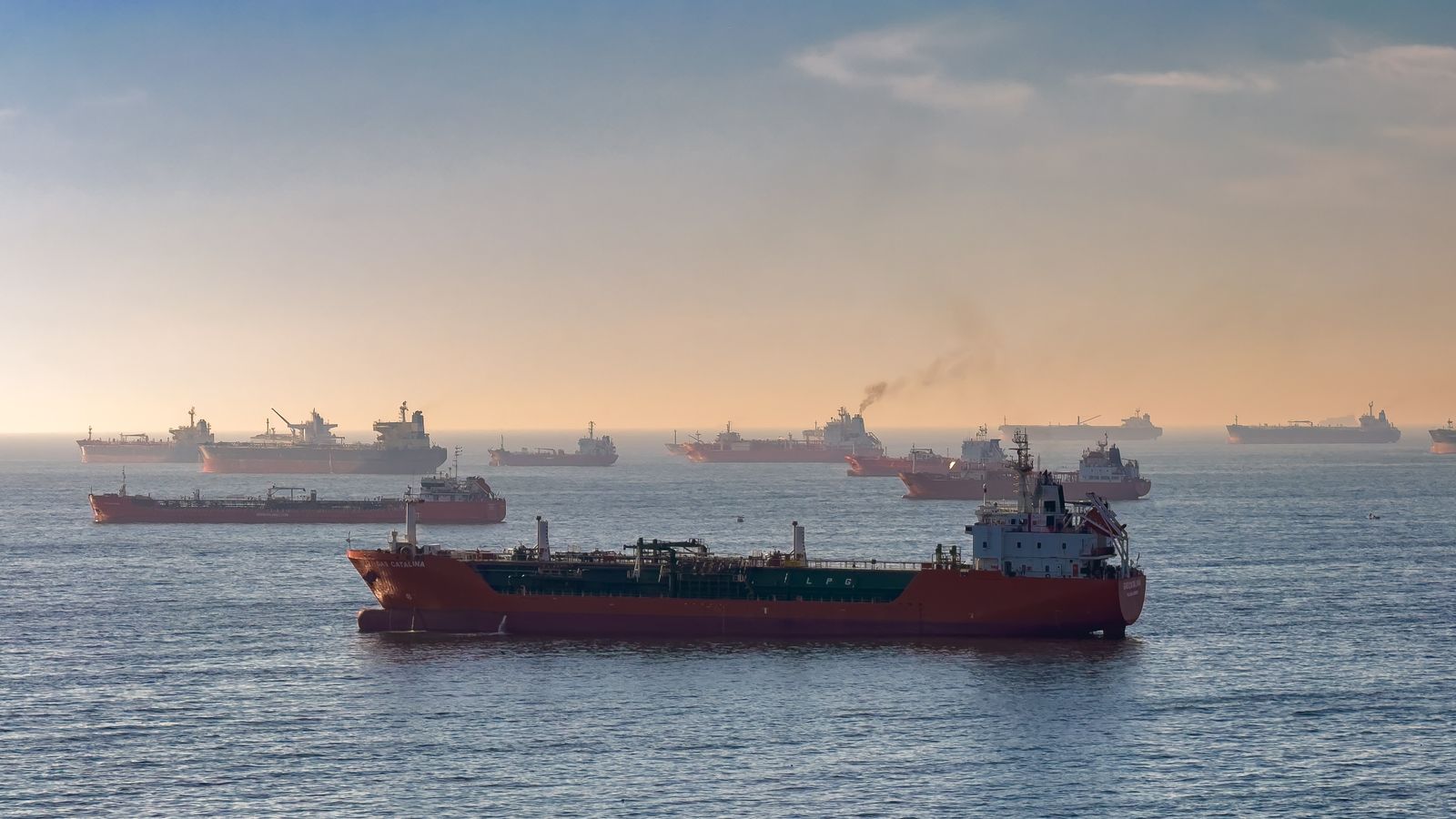
This event did not occur in a vacuum. It compounds the near-total blockade imposed by Iran on the Strait of Hormuz* since February 2026, a passage through which 20 million barrels of crude oil typically flow each day. Barely 4 commodity vessels managed to cross this bottleneck on September 17. By combining the closure of Hormuz with control over Bab el-Mandeb, Tehran-aligned forces now hold both gateways to Middle Eastern hydrocarbons, directly threatening nearly one-third of global maritime trade.
Understanding it
Bab el-Mandeb and Hormuz act as the two maritime lungs of global energy.
Hormuz channels crude out of the Persian Gulf, while Bab el-Mandeb channels it into the Red Sea toward the Suez Canal and Europe. If either closes, traffic slows down; if both are blocked at the same time, nearly one-third of global maritime freight and half of all seaborne oil flows grind to a complete halt.
To bypass these blocked straits, shipping companies are forced to reroute their vessels around Africa via the Cape of Good Hope. This 10-to-14-day detour drives up insurance costs, consumes massive amounts of bunker fuel, and disrupts global industrial supply chains. Further compounding the crisis, the Saudi East-West Pipeline—which transported crude directly from eastern oilfields to the Red Sea without passing through Hormuz—was shut down on September 11, 2026 following drone strikes claimed by pro-Iranian militias.
The fallout across energy markets is swift and substantial. Brent crude surpassed the warning threshold of $107 per barrel on September 14, while global oil inventories have already plunged by 507 million barrels since February 2026 to offset transit delays. According to estimates from JPMorgan, this price level factors in an immediate risk of an additional 4 million barrels per day in supply disruptions. Europe’s ongoing dependence on maritime supplies deepens our economic vulnerability—for more on how this impacts energy bills, feel free to read our article.
Political uncertainty remains absolute regarding the rebels’ true intentions. Converging reports indicate that the Houthis have initiated talks with Tehran to impose a security toll on every cargo ship crossing Bab el-Mandeb, turning an international sea lane governed by maritime law into a tool for financial extortion and geopolitical leverage. Major naval powers, including the United States and the European Union, have yet to formulate a large-scale military response, fearing that an armed escalation could engulf the entire Arabian Peninsula.
Understanding it
The Houthis are leveraging their geographical position for geopolitical blackmail.
Based in northern Yemen and supplied with Iranian missiles and drones, the Ansar Allah movement is turning the strait into a forced toll booth. By controlling Perim Island in the middle of the channel, they can target or clear ships on a case-by-case basis to extract diplomatic or financial concessions.
This crisis sets a historic precedent that will reshape collective security for the next decade. It marks the first time a non-state armed group has managed to durably shut down a strategic international chokepoint* by coordinating its operations with a missile- and drone-equipped regional power. How this dual maritime blockade plays out will determine whether global trade routes remain open commons or fracture under the control of local militias.
Brent crude (barrel)$107 +$28 since February 2026
Commodity traffic in Hormuz4 vessels nearly shut since Feb. 2026
Favorable, stable, or degraded
Three scenarios for the future of maritime shipping routes and energy
What we're assessing
FavorableUne alliance maritime internationale rouvre un passage sécurisé et ramène les prix de l'énergie sous les 90 dollars.
StableUn régime de passage sous péage houthi s'installe durablement avec un pétrole oscillant autour de 100 dollars.
DégradéLe verrouillage total d'Ormuz et de Bab el-Mandeb déclenche un troisième choc pétrolier mondial au-delà de 130 dollars.
Favorable
25%
Unlikely
Restoration of a protected international maritime corridor
Under this scenario, an expanded naval coalition bringing together the United States, European navies, and regional partners such as Saudi Arabia launches a joint operation to escort commercial traffic and neutralize coastal batteries on Perim Island. Facing decisive military deterrence and the threat of tightened economic sanctions on their financial networks, the Houthis agree to relinquish direct control over shipping lanes without imposing illegal tolls. Traffic gradually resumes through Bab el-Mandeb, allowing tankers and container ships to avoid the long voyage around the Cape of Good Hope.
This peaceful outcome remains the least likely compared to the status quo or a hard blockade, as it would require Iran to simultaneously surrender its bargaining chip in Hormuz without securing major nuclear or regional concessions. Should this secured corridor materialize, Brent crude would quickly drop back below $90 per barrel, halting the depletion of 507 million barrels from global reserves and sustainably stabilizing supply to European refineries.
Indicators affected
Pétrole Brent (baril)88 USD↓107 USD
Trafic de matières premières à Ormuz25 navires/jour↑4 navires
The France angleRapid drop in fuel prices at the pump and easing of energy-driven inflation for households. ↑ Rather favorable for France.
Stable
45%
Likely
Normalization of restricted transit under a de facto toll system
The situation on the ground settles into an unofficial armed truce in which the Houthis consolidate their fortified positions on Perim Island without systematically sinking every vessel. Working closely with Tehran, they set up a maritime control mechanism requiring transit fees and prior clearance for shipowners willing to negotiate. Major global shipping lines factor these extra costs and delays in as a permanent fixture of their freight rates, choosing to pay or split their fleets between the Red Sea and the Cape route.
Compared to a complete reopening or outright warfare, this middle-ground outcome emerges as the most realistic, since no power is willing to bear the human and military cost of a ground landing in Yemen. Brent crude settles into a persistent range between $95 and $110, sustaining inflationary pressure on manufactured goods and energy while averting panic over a physical supply cutoff thanks to partial, monitored flows.
Indicators affected
Pétrole Brent (baril)102 USD→107 USD
Trafic de matières premières à Ormuz6 navires/jour→4 navires
The France angleLasting rise in import costs and added expenses passed on to commercial freight and industry. ↓ Rather unfavorable for France.
Degraded
30%
Likely
Total blockade of the straits and global energy crisis
Iran and Houthi militias coordinate an airtight, simultaneous military closure of both the Strait of Hormuz and Bab el-Mandeb using sea minefields, swarms of loitering munitions, and anti-ship ballistic missile strikes. Maritime insurers immediately halt all coverage across the Middle East, forcing all global crude and liquefied natural gas traffic to turn back. With the Saudi East-West Pipeline out of commission, regional hydrocarbon exports plummet by several million barrels per day within weeks.
Unlike the negotiated toll scenario where cargo continues to move at a slower pace, this total physical cutoff sends Brent crude surging past $130 per barrel and drains Western strategic reserves in under six months. Such a spike would trigger a sharp recession across Europe and Asia, forcing importing nations to implement emergency energy rationing and signaling the international order’s inability to protect the vital arteries of globalization.
Indicators affected
Pétrole Brent (baril)135 USD↑107 USD
Trafic de matières premières à Ormuz0 navire↓4 navires
The France angleMajor risk of economic recession, potential fuel rationing, and severe inflation shock. ↓ Rather unfavorable for France.
Ordres de grandeur indicatifs pour les 3 scénarios ci-dessus, estimés avec l'information disponible à la publication et réévalués si la situation change — jamais des prévisions garanties. Learn more about our method →
Key takeaways
Do Houthi control of Perim Island and Iran’s near-blockade of Hormuz threaten to trap one-third of global maritime trade in a prolonged energy crisis?
The capture of Perim on September 18, 2026, the shutdown of the Saudi pipeline, and a 507-million-barrel drop in global inventories have pushed Brent crude above $107.
Yes, a lasting crisis is the most likely outcome at 75% when combining the disruptive toll scenario (45%) and the total blockade scenario (30%), locking in high prices and disrupted sea routes.
Signal to watch: The official announcement by Tehran and the Houthis outlining the exact terms of their proposed maritime security toll to transit the Bab el-Mandeb Strait.
Fairly negative
Our assessment of the impact for France: fairly negative.with a 75% cumulative probability of a disruptive toll or severe blockade keeping oil prices elevated.
Si tu devais retenir 1 chose
Avec la prise de l'île de Perim et le blocus d'Ormuz, les stocks pétroliers mondiaux ont déjà chuté de 507 millions de barils alors que le Brent dépasse 107 dollars.
An Iranian-backed political and military movement originating in northern Yemen that controls large swaths of Yemeni territory and the approaches to the Red Sea.
Bab el-Mandeb
A strategic maritime strait located between the Horn of Africa and Yemen, connecting the Indian Ocean to the Red Sea and the Suez Canal.
Strait of Hormuz
A narrow maritime waterway linking the Persian Gulf to the Gulf of Oman, through which approximately one-fifth of global oil consumption typically transits.
Chokepoint
A narrow geographical bottleneck along a major trade route whose forced closure disrupts international maritime traffic as a whole.