Every day, one story that matters, broken down into three numbered scenarios, each with its own probability. Never fixed — it shifts as the situation changes.
Scénario
Tuesday, carte blanche
Ethiopia-Eritrea: Heading Towards a New Regional War?
Can the military escalation between Ethiopia and Eritrea, following the October 1 diplomatic breakdown and Ethiopian drone strikes on Adigrat, be contained, or will it spiral into open war?
Publié le 27 octobre 2026
Share:
The facts
The point, in plain terms
Ethiopia and Eritrea find themselves on the brink of direct conflict following a diplomatic rupture and targeted airstrikes.
Ethiopia has been landlocked for thirty years and covets its Eritrean neighbor’s ports for trade. Both countries are emerging from a war that claimed around 600,000 lives, and any new spark threatens to deeply destabilize the region. Even though this conflict unfolds far from Europe, it jeopardizes the safety of merchant ships in the Red Sea and risks triggering major new humanitarian crises.
The Horn of Africa is once again plunging into a major crisis. On October 1, 2026, the Ethiopian government accused Eritrea of escalating border aggressions and announced a total severing of diplomatic relations with Asmara. This announcement was followed on the night of October 8-9, 2026, by Ethiopian drone* strikes against Eritrean positions near the town of Adigrat, located about forty kilometers from the shared border. In response to this show of military force, the Eritrean government brought the matter before the UN Security Council* on October 10, 2026, describing the Ethiopian move as a veritable declaration of open war.
To understand the extreme gravity of this standoff, one must grasp the magnitude of the trauma left by recent fighting. Between 2020 and 2022, the Tigray War and border clashes pitted the armed forces of both nations against each other, leaving around 600,000 dead according to United Nations estimates. This colossal human toll left deep scars across both societies, destroyed economic infrastructure in northern Ethiopia, and ruined mutual trust between leaders in Addis Ababa and Asmara. Every troop movement is now perceived as a direct trigger for full-scale conflagration.
Understanding it
The 2020–2022 War: Why Deep Distrust Persists Between Both Capitals
This previous conflict acted like a devastating fire that left smoldering embers behind. With around 600,000 dead, the immense human toll has made any quick reconciliation between the two nations’ leaders impossible.
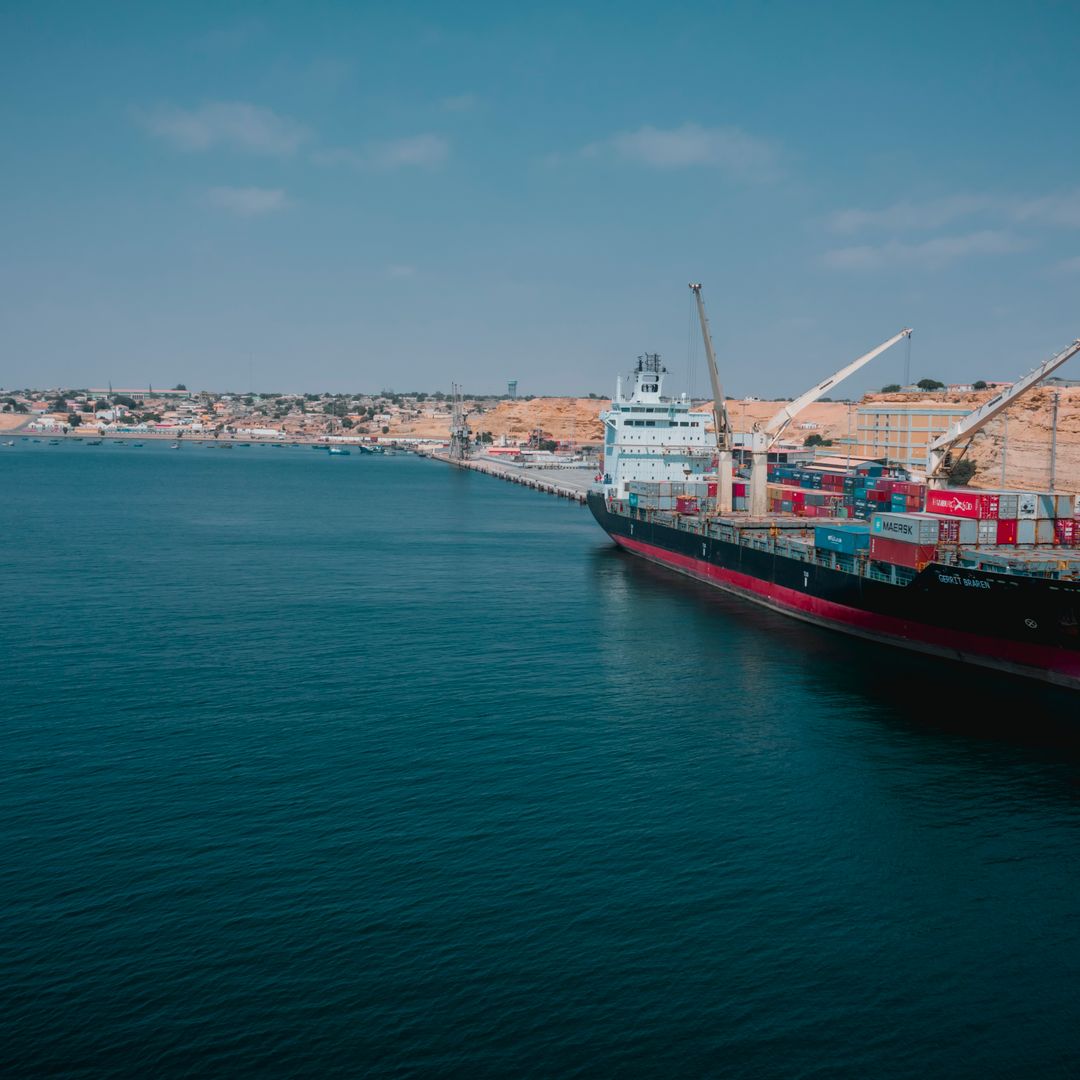
At the core of this persistent dispute lies a major geographic constraint: Ethiopia’s status as a completely landlocked country*. Since Eritrea gained independence in 1993, the region’s most populous nation has lacked direct access to the Red Sea and must pay substantial transit fees to its neighbors to move goods. The port of Assab*, situated on the Eritrean coastline, has become the symbol of this national frustration. For Addis Ababa, securing sovereign maritime access is a vital economic imperative, whereas for Asmara, this claim constitutes an intolerable infringement on its territorial sovereignty.
Understanding it
The Port of Assab: The Maritime Bottleneck Choking Ethiopia’s Economy
The situation resembles a landlocked property whose owner must pay a continuous right-of-way fee to neighbors just to reach the main road. Ethiopia refuses to rely entirely on these transit tolls for its foreign trade.
The current situation is deeply alarming to the international community due to its potential to spread across the entire Horn of Africa. UN Secretary-General António Guterres has publicly warned of the risk of an uncontrollable regional flare-up if both capitals do not immediately halt military escalation. An open war would not remain confined to the border area: it could draw in foreign powers already heavily established along Red Sea shipping lanes and destabilize highly fragile neighboring countries such as Sudan.
Uncertainty remains complete regarding the true intentions of military leaders and the available diplomatic mediation capabilities. While Eritrea is currently seeking to mobilize international diplomacy by appealing to the United Nations in New York, the African Union* has yet to take a confirmed public official stance to defuse the crisis. This temporary diplomatic vacuum leaves ample room for shows of force on the ground, where every artillery strike or air raid can trigger an immediate retaliation.
Faced with this explosive standoff, the region’s immediate future splits into three distinct paths. The international community may succeed in brokering a swift ceasefire under regional mediation, both armies could settle into an armed standoff marked by regular skirmishes without a full-scale offensive, or military escalation could erupt into a devastating total war. Analyzing these three scenarios helps identify the flashpoints of this new strategic crisis.
Death toll of the 2020–2022 Ethiopia-Eritrea wararound 600,000 deaths Benchmark human toll (UN)
Date of diplomatic ruptureOctober 1, 2026 Trigger of the current crisis
Les chiffres
La crise frontalière Éthiopie-Érythrée s'accompagne déjà d'un déplacement de populations : voici les chiffres du HCR sur les réfugiés dans la région.
Érythréens au Soudan
136 372 (30 sept. 2026)
Éthiopiens au Soudan
64 785 (30 sept. 2026)
Érythréens en Éthiopie
124 650 (31 août 2026)
Source : Haut-Commissariat des Nations unies pour les réfugiés (HCR), données au 30 septembre 2026 pour le Soudan et au 31 août 2026 pour les déplacés internes.
Three Outcomes for the Military Crisis Between Ethiopia and Eritrea
What we're assessing
FavorableUne médiation diplomatique internationale gèle les hostilités et rétablit le dialogue sur les accès maritimes.
StableLes armées maintiennent un face-à-face tendu avec des frappes sporadiques sans déclencher de guerre générale.
DégradéL'offensive militaire terrestre s'étend et provoque un conflit régional ouvert aux conséquences humanitaires désastreuses.
Favorable
25%
Unlikely
International mediation secures a ceasefire and reopens talks
In this scenario, combined pressure from the UN, Western capitals, and Gulf powers forces Addis Ababa and Asmara to immediately halt artillery fire and drone raids near Adigrat. Both governments agree to pull back their heavy units more than thirty kilometers from the border under the supervision of neutral observers. This swift de-escalation paves the way for African Union-led talks to explore shared commercial transit agreements to the coast without demanding territorial concessions.
This peaceful outcome requires a political willingness to compromise that neither Ethiopia nor Eritrea is currently displaying. Unlike a full-scale war scenario that would destroy the regional economy or a military status quo that perpetuates constant insecurity, this path would require immediate symbolic concessions regarding Assab. A lasting de-escalation could nonetheless materialize if the financial cost of renewed mobilization becomes unsustainable for both regimes.
Indicators affected
Morts guerre 2020-20220 nouveau décès direct→environ 600 000 morts
Rupture diplomatiqueReprise du dialogue↑1er octobre 2026
The France angleSecuring maritime corridors in the Red Sea protects French foreign trade and eases pressure on ocean freight rates. ↑ Rather favorable for France.
Stable
45%
Likely
A militarized status quo takes hold with regular skirmishes but no major offensive
In this setup, which represents our most likely scenario, both armies avoid launching a large-scale ground offensive but maintain a combat posture along the demarcation line. Ethiopian drone strikes and Eritrean artillery responses remain confined to the Adigrat border area to intimidate the opponent without crossing the threshold into all-out war. Diplomatic relations remain frozen, land borders tightly sealed, and cross-border trade completely suspended for several consecutive quarters.
This pattern extends the “no war, no peace” state that historically prevailed in the region for over two decades. Compared to swift reconciliation, this scenario traps local populations in damaging economic uncertainty and keeps hundreds of thousands of soldiers mobilized. This prolonged stalemate threatens to permanently weaken stability in the Horn of Africa by turning the border into a highly volatile, perpetual friction zone.
Indicators affected
Morts guerre 2020-2022Victimes sporadiques↑environ 600 000 morts
Rupture diplomatiqueRelations gelées→1er octobre 2026
The France angleOngoing insecurity in the Horn of Africa keeps insurance premiums high for European commercial vessels. ↓ Rather unfavorable for France.
Degraded
30%
Likely
Open war erupts and engulfs the entire region
In this destructive trajectory, drone strikes by Addis Ababa trigger a massive counteroffensive by Eritrean ground forces across Tigray. Ethiopia then launches an all-out offensive with the explicit aim of conquering a sovereign corridor leading directly to the Red Sea port of Assab. The fighting immediately causes massive destruction, heavy military casualties, and the displacement of hundreds of thousands of civilians fleeing toward neighboring Sudan or coastal nations.
Such an outcome would far exceed a simple neighborhood dispute, turning into a proxy war involving Middle Eastern and Red Sea powers. While the base-case scenario limits damage to local skirmishes and mediation preserves border integrity, all-out war would plunge the region into unprecedented humanitarian and logistical chaos. This widespread military conflagration could durably disrupt maritime trade routes linking Asia to Europe.
Indicators affected
Morts guerre 2020-2022Nouveau bilan massif↑environ 600 000 morts
Rupture diplomatiqueÉtat de guerre officiel↓1er octobre 2026
The France angleA major regional crisis would directly threaten Suez Canal shipping flows and trigger renewed migratory pressures toward Europe. ↓ Rather unfavorable for France.
Ordres de grandeur indicatifs pour les 3 scénarios ci-dessus, estimés avec l'information disponible à la publication et réévalués si la situation change — jamais des prévisions garanties. Learn more about our method → · How to read a probability →
Key takeaways
Military escalation between Ethiopia and Eritrea, marked by drone strikes near the shared border, threatens to trigger a new cycle of destructive conflict in East Africa.
The diplomatic breakdown on October 1, 2026, and air raids on Adigrat revive the heavy trauma of the 2020–2022 conflict, which left around 600,000 dead in the region.
Our most likely scenario (45%) anticipates a high-tension status quo with regular skirmishes, ahead of the risk of open war (30%) and the hope of swift mediation (25%).
The key signal to watch will be whether an emergency UN Security Council meeting is convened or blocked to order an immediate ceasefire and the withdrawal of heavy units.
Somewhat negative
Our assessment of the impact for France: somewhat negative.the combined probability of a high-tension status quo (45%) and open war (30%) threatens the security of European maritime freight crossing the Red Sea.
Si tu devais retenir 1 chose
La crise entre l'Éthiopie et l'Érythrée ravive le spectre de la guerre de 2020-2022 qui avait causé environ 600 000 morts.
Don't miss the next edition:
For those new to the topic
Quick glossary
drones
Unmanned aircraft, remotely piloted or autonomous, used for reconnaissance missions or precision strikes.
UN Security Council
United Nations body responsible for maintaining international peace and security, empowered to pass binding resolutions.
landlocked status
Geographic situation of a territory lacking direct sovereign access to the sea, relying on neighboring countries for its trade.
Port of Assab
Strategic Eritrean port city on the Red Sea, historically the natural outlet for Ethiopian foreign trade.
African Union
Continental organization comprising 55 African member states, acting to prevent conflicts and facilitate peace mediation.