Every day, one story that matters, broken down into three numbered scenarios, each with its own probability. Never fixed — it shifts as the situation changes.
Scénario
Saturday, culture
Can China create the next global pop culture?
Can Beijing produce franchises capable of competing with Disney, Marvel, Nintendo, or Netflix, or does its model remain trapped by censorship and foreign perception?
Publié le 26 septembre 2026
Share:
The facts
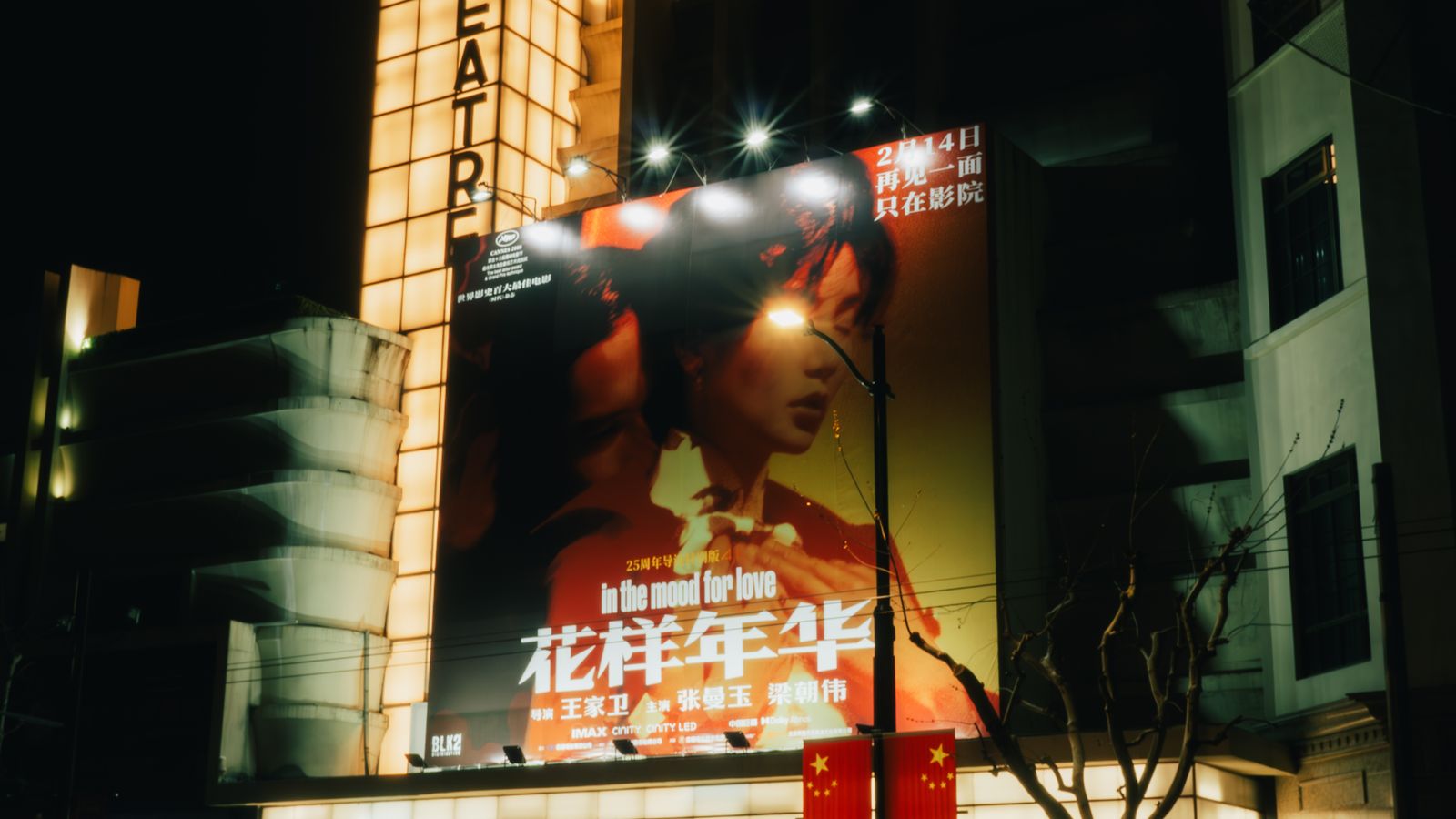
Long viewed as a mere consumer of American blockbusters, China has profoundly transformed its domestic audiovisual landscape by building a highly efficient entertainment industry. The country became the world’s largest film market by admissions back in 2018, overtaking the United States for the first time thanks to a massive cinema network and an audience increasingly keen on domestic stories. This structural shift has led to a gradual decline of Western releases in favor of big-budget local blockbusters. A similar topic was previously analyzed in our archives: our edition on Hollywood’s slump in China.
This industrial surge reached a historic milestone on the big screen with staggering financial records. In 2025, the animated film Ne Zha 2 topped 10 billion yuan at the box office, becoming the biggest commercial hit in Chinese cinema history and demonstrating the technical maturity of its studios. Chinese animation no longer simply copies Hollywood formulas: it draws directly on Taoist mythology and traditional tales to craft complex visual universes. Yet the vast majority of these colossal revenues still comes almost exclusively from the domestic audience and Southeast Asian diasporas, highlighting the persistent gap with true global hegemony.
The video game industry provides another major sign of this ambition, with technical achievements now rivaling top Western and Japanese studios. Released in August 2024, the action game Black Myth: Wukong sold over 10 million copies in its first few weeks, making a notable breakthrough among European and American gamers. Inspired by the classic novel Journey to the West, the title proved that a narrative deeply rooted in Chinese folklore could attract audiences across borders without compromising its cultural identity. It is one of the rare instances where Beijing’s digital soft power** has organically gained ground on global gaming platforms.
Yet the drive to establish lasting franchises on par with Pokémon, Star Wars, or Marvel runs into rigid political constraints. The central government maintains a strict ideological control apparatus, where every screenplay, line of dialogue, or digital publication must obtain prior approval from the National Radio and Television Administration**. This preventive censorship aims to safeguard social cohesion and the Chinese Communist Party’s ideological line by removing subversive themes, biting humor, or institutional criticism. Such state constraints stifle creative edge and often restrict the freedom of tone essential to resonate with international youth accustomed to more transgressive or spontaneous storytelling.
Understanding it
State censorship acts as an ideological filter that standardizes creative works before release.
Much like a fine sieve, the administration approves every line of dialogue to ensure political compliance. While this mechanism safeguards domestic political priorities, it often strips away the creative edge and autonomy needed to attract younger international audiences.
Beyond institutional hurdles, exporting Chinese creations suffers from growing geopolitical distrust and the dominance of foreign distribution platforms. Unlike American conglomerates that own global streaming networks such as Netflix or Disney+, Chinese groups struggle to gain traction with their apps among Western audiences due to recurring suspicions over data privacy. The global perception of China, often linked to diplomatic tensions or digital surveillance, triggers pushback from some international consumers. Turning a standalone hit into lasting emotional attachment to a cultural brand requires trust and mutual openness, which are particularly hard to cultivate today.
Understanding it
Filling domestic cinemas is not enough to build a universal pop culture.
A massive home market helps recoup huge budgets, like a giant community hall reserved for neighbors. But exporting a global franchise is more like getting people to love a song in every language: it requires spontaneous appeal without direct control.
Beijing’s cultural equation thus hinges on a fundamental tension between the financial muscle of a massive domestic market and a structural inability to freely export its cultural imagination. The challenge in the coming years is no longer just breaking box-office records in Shanghai or Beijing, but creating iconic characters capable of driving merchandise, spin-off series, and theme parks across five continents. Three distinct paths are now emerging to assess whether the Middle Kingdom will remain a self-contained cultural fortress or succeed in shaping the new myths of global pop culture over the next decade.
Chinese box office (Ne Zha 2)10 billion yuan all-time domestic record set in 2025
Black Myth: Wukong sales10 million copies sales volume reached in the first months of 2024
Cinema market share China vs. USChina > US in admissions world leader since 2018
China faces the challenge of global cultural export
What we're assessing
FavorableLa Chine assouplit ses règles et transforme ses succès créatifs en empires mondiaux du divertissement.
StableLes studios chinois règnent sans partage chez eux mais restent confinés à une audience régionale.
DégradéLa surveillance étatique et le rejet géopolitique bloquent définitivement le rayonnement des œuvres chinoises.
Favorable
25%
Unlikely
Chinese franchises break out globally and challenge Western giants
In this first scenario, Chinese creators leverage their massive domestic revenue to build visual and narrative universes tailored from the start for global audiences. Capitalizing on the breakthrough of 10 million copies sold for Black Myth: Wukong, tech giants invest heavily in productions blending Asian mythology, forward-looking science fiction, and cutting-edge visual effects. To enable this expansion, Beijing grants greater editorial autonomy to exporting studios, turning a blind eye to certain Western tropes to maximize global appeal. Chinese animated films and drama series secure major distribution deals, becoming fixtures in younger generations’ media consumption.
This favorable path moves well beyond inward retreat and simple regional hegemony, translating financial milestones like the 10 billion yuan of Ne Zha 2 into global brand equity. Unlike the other two scenarios where geopolitical distrust quashes every effort, a subtle charm offensive would establish enduring Chinese franchises alongside Marvel, Nintendo, or Disney in toy aisles and on streaming platforms. China would thus prove its ability to craft universally compelling narratives, even though such an editorial shift would require political loosening that authorities remain very hesitant to grant.
Indicators affected
Box-office chinois (Ne Zha 2)Succès mondial majeur↑10 milliards de yuans concentrés en Chine
Ventes Black Myth: WukongDépassement des 25 millions↑10 millions d'exemplaires au lancement
Part de marché cinéma chinois vs USHégémonie en entrées et en recettes mondiales↑Leader en entrées depuis 2018
The France angleMass influx of new Chinese franchises in French cinemas and platforms, spurring cultural competition. ↑ Rather favorable for France.
Stable
50%
Likely
China dominates at home but remains confined to its regional sphere
In this baseline scenario, China’s cultural industry cements its absolute grip on its home market by ramping up patriotic blockbusters, historical adaptations, and entertainment tailored to domestic tastes. Local cinema continues to crush American competition at home, maintaining the country as the world leader in admissions since 2018 without feeling the pressing need to adapt its storytelling to Western preferences. Major hits in animation and video games export successfully to diaspora communities and neighboring East Asian markets, generating huge profits while struggling to scale the cultural barrier in Western markets that remain loyal to Hollywood and Japanese franchises.
Compared to the global expansion scenario, this middle path shows that a franchise can be immensely lucrative relying solely on its Asian base, without ever becoming a worldwide pop phenomenon shared by teens everywhere. Unlike the total deadlock scenario, Chinese studios maintain strong economic momentum and undeniable technological prowess, allowing them to compete with the West on occasion. The equilibrium would thus settle around two parallel cultural spheres, with China content to reign over its own entertainment empire without seeking to overturn the global symbolic order.
Indicators affected
Box-office chinois (Ne Zha 2)Records domestiques récurrents→10 milliards de yuans de référence
Ventes Black Myth: WukongVentes stables centrées sur l'Asie→10 millions d'exemplaires au départ
Part de marché cinéma chinois vs USDomination intérieure incontestée→Chine > US en volume depuis 2018
The France angleSporadic access to a few niche Chinese productions in France, without meaningful change to mainstream cultural consumption. ↓ Rather unfavorable for France.
Degraded
25%
Unlikely
Ideological tightening and geopolitical tensions isolate Chinese creative works
In this downside scenario, tighter political control in Beijing suffocates any creative boldness by enforcing strict ideological alignment across all artistic output. Filmmakers and game developers must make heavy patriotic compromises to pass censorship boards, making their work unappealing or off-putting to audiences in democratic countries. Meanwhile, Western governments tighten digital regulations and curb access to Chinese-owned streaming platforms over concerns of cultural interference or espionage. International breakthroughs fade quickly, leaving studios unable to replicate the commercial success of a major hit video game.
This breakdown scenario sharply differs from regional stability by reducing China’s cultural industry to a domestic propaganda tool stripped of foreign appeal. While previous scenarios envisioned fierce technological and artistic competition, this forced retreat would sever ties between local creators and international co-production and distribution channels. China would remain a passive consumer of technologies while remaining unable to export its national narrative beyond its borders, proving that financial firepower cannot offset a persistent deficit in creative freedom and geopolitical goodwill.
Indicators affected
Box-office chinois (Ne Zha 2)Repli exclusif sur le public national↓10 milliards de yuans de record
Ventes Black Myth: WukongÉchec des suites à l'international↓10 millions d'exemplaires atteints
Part de marché cinéma chinois vs USIsolement cinéphile et boycott mutuel↓Supériorité en nombre d'entrées depuis 2018
The France angleSevered audiovisual ties with China and heightened distrust of Chinese-owned entertainment apps. ↓ Rather unfavorable for France.
Ordres de grandeur indicatifs pour les 3 scénarios ci-dessus, estimés avec l'information disponible à la publication et réévalués si la situation change — jamais des prévisions garanties. Learn more about our method →
Key takeaways
Beijing is actively seeking to convert its position as the world’s leading film market into an export powerhouse capable of rivaling Disney or Netflix, but state censorship holds this ambition back.
China has been the world leader in cinema admissions since 2018, and recent releases like Ne Zha 2 (10 billion yuan in box office) or Black Myth: Wukong (10 million copies sold) prove its technical prowess.
No, the Chinese model will not easily conquer the global stage: our most likely scenario (50%) projects confinement to regional Asia, alongside two more extreme outcomes: a global breakthrough (25%) or outright geopolitical rejection (25%).
Export numbers for upcoming major Chinese video game and animation franchises to Europe and the United States by 2027 will serve as a concrete test of global appeal.
Fairly negative
Our assessment of the impact for France: fairly negative.the dominance of our regional retrenchment scenario (50%) and the risk of isolation (25%) deprives French audiences of real diversification in global culture against American monopolies.
Si tu devais retenir 1 chose
Avec un record de 10 milliards de yuans pour Ne Zha 2 et plus de 10 millions d'exemplaires vendus pour Black Myth: Wukong, la Chine prouve sa puissance industrielle mais peine encore à exporter sa pop culture.
A country’s ability to attract, influence, and persuade other nations through the appeal of its culture, values, or lifestyle, without relying on military or economic coercion.
NRTA
National Radio and Television Administration in China, the government agency responsible for overseeing, censoring, and approving all audiovisual and digital content broadcast in the country.