Every day, one story that matters, broken down into three numbered scenarios, each with its own probability. Never fixed — it shifts as the situation changes.
Scénario
Monday, geopolitics
World Order: The End of Western Rule?
Is Western dominance being challenged by an increasingly multipolar world?
Publié le 28 septembre 2026
Share:
The facts
Since the end of the Second World War and the subsequent fall of the Soviet Union, Western powers led by the United States have shaped the rules of global diplomacy, economics, and finance. This international architecture rested on undisputed military supremacy, multilateral trade rules, and the omnipotence of the greenback as the universal currency. However, contemporary geopolitical balances are undergoing a profound realignment. The rapid rise of major non-Western economies is upending the traditional hierarchy, forcing Western capitals to reckon with new centers of influence that now demand a central role in global governance.
Understanding it
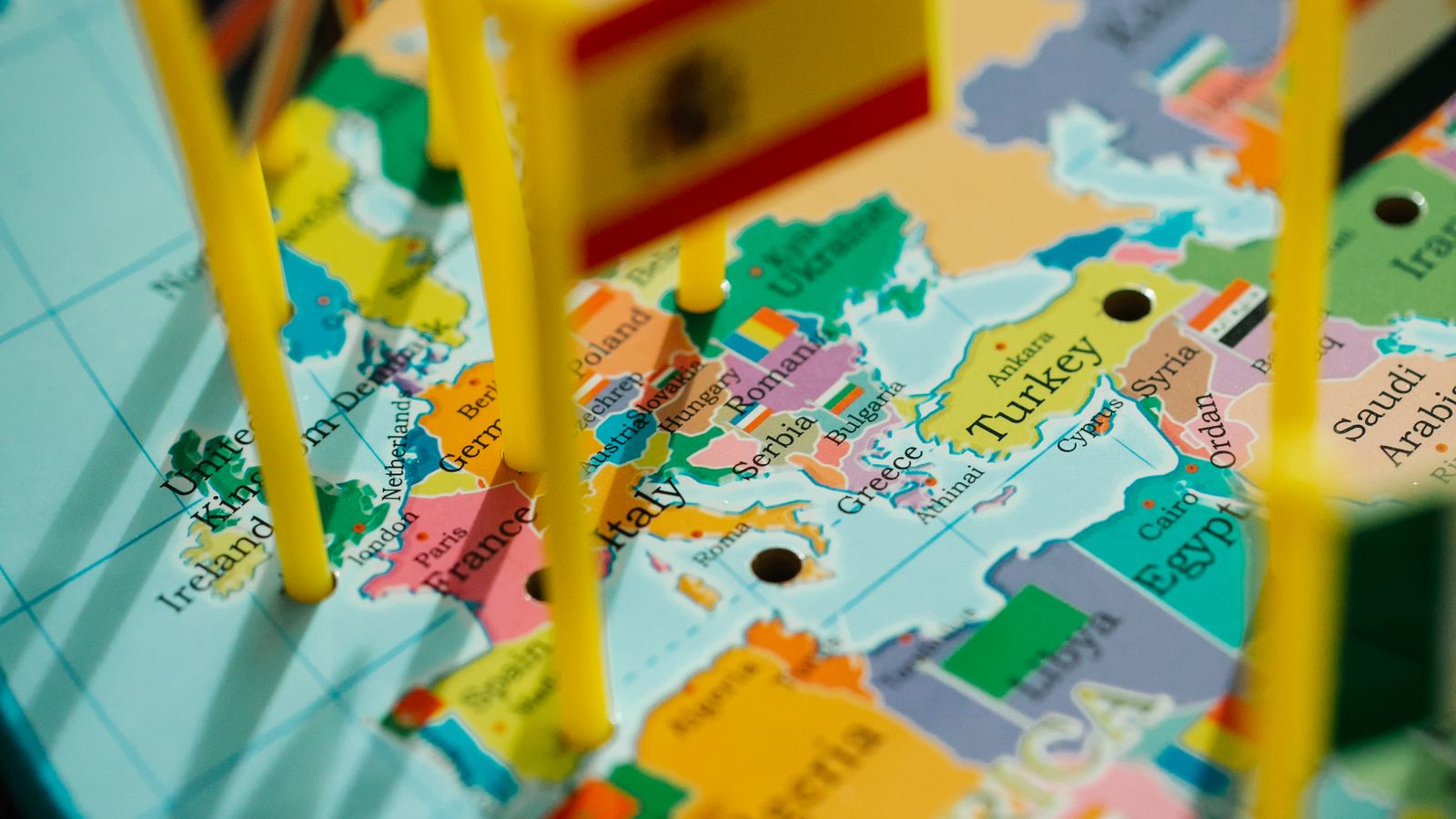
Multipolarity refers to the distribution of global power among several independent poles.
In a unipolar system, a single superpower sets the rules, as the United States did after 1991. A multipolar order operates more like a boardroom where several major players (Washington, Beijing, New Delhi, Brussels) must negotiate compromises, with no single actor able to impose its will unilaterally.
In strictly economic terms, this shift is already evident in key statistical indicators. According to data from the International Monetary Fund, China's share of the global economy reached a decisive symbolic milestone, as China's GDP (PPP) overtook the United States' GDP (PPP) in 2024*. This industrial momentum is mirrored by the rapid rise of India and Brazil, which are challenging the representativeness of legacy organizations like the International Monetary Fund and the World Trade Organization. The combined demographic and productive weight of these nations is redrawing the map of wealth, mechanically eroding the historical hegemony of G7 members.
Yet this shift in productive power has not triggered an immediate collapse of American leadership, which rests on exceptionally robust foundations. The United States maintains a technological edge and an unrivaled network of military alliances worldwide, backed by unmatched defense spending and hundreds of bases across every continent. Furthermore, international finance remains deeply anchored around New York markets and the US dollar as the primary reserve currency*, granting Washington a degree of soft power and extraterritorial sanctions reach that no other capital can match today.
Understanding it
The US dollar retains its role as a global pivot thanks to the depth of its financial markets.
Even as the economic share of Western nations declines, the US dollar remains the preferred medium of exchange in international trade. Its liquidity and the security of US sovereign debt provide Washington with geopolitical leverage that no competing currency can match today.
However, challenges to this security and financial order have accelerated in recent years through several major shocks. The Russian invasion of Ukraine in February 2022 marked a clear break with European collective security principles, prompting Moscow to pivot toward Asian partners. Meanwhile, initiatives aimed at partial de-dollarization* of trade have multiplied, particularly for settling hydrocarbon contracts. The historic expansion of the BRICS group in 2024 formalized this push to institutionalize a structured diplomatic counterweight to traditional Western powers.
Nonetheless, describing this trend as a unilateral shift toward a post-Western world overlooks profound divisions within the emerging bloc itself. India, for instance, maintains a sharp territorial rivalry with Beijing while strengthening technological partnerships with Western democracies, refusing to align blindly with a Sino-Russian axis. For its part, the European Union is struggling to build its own strategic autonomy amid growing US-China rivalry. Middle powers are acting on a case-by-case basis according to their immediate interests, turning the international arena into a fluid, shifting web of alliances rather than a homogenous bloc.
This complexity makes the future of the international order fiercely contested, fluctuating between pragmatic cooperation, economic wars of attrition, and irreversible geopolitical fragmentation. Trade and tech tensions between Washington and Beijing across 2025–2026 demonstrate that each major power is seeking to secure its critical value chains while avoiding direct confrontation. Future balances will hinge on whether multilateral institutions can reform their governance, or if the world risks fracturing permanently into rival, walled-off spheres of influence.
Western share (G7) of global GDP (PPP)in continuous decline structural decline measured since 2000
Number of countries moving away from the US dollar for tradeincreasing sharp acceleration in non-dollar bilateral agreements
The end of Western hegemony or a mere rebalancing of power?
What we're assessing
FavorableUn multilatéralisme réformé garantit la stabilité et intègre équitablement les pays émergents.
StableLes États-Unis dominent la finance et la sécurité tandis que les puissances régionales s'affirment.
DégradéLa scène mondiale se fracture en blocs rivaux et paralyse la régulation internationale.
Favorable
30%
Likely
Multipolar cooperation and adaptation of international institutions
In this first forward-looking scenario, Western powers and major emerging economies reach a historic compromise to modernize the rules of global governance. Multilateral institutions such as the United Nations, the International Monetary Fund, and the World Trade Organization agree to revise quotas and voting rights to accurately reflect the demographic and economic weight of India, Brazil, and African nations. This institutional integration helps defuse revisionist grievances, stabilizes global trade flows, and establishes effective dialogue channels to prevent the escalation of regional conflicts.
Compared to the other two trajectories, this path requires exceptional political willingness to share power—something dominant powers rarely concede willingly. Unlike the asymmetric rivalry scenario where friction persists, this outcome dampens the incentive to build parallel financial systems while avoiding contentious fragmentation into hermetic blocs. Multilateral diplomacy would thus regain practical effectiveness, even though enduring ideological divides between democracies and authoritarian regimes could slow the rollout of such agreements through the end of the decade.
Indicators affected
Part de l'Occident (G7) dans le PIB mondial (PPP)stabilisation relative→en baisse continue
Nombre de pays s'éloignant du dollar américain pour le commerceralentissement de la diversification↓en augmentation
The France angleFrance and Europe would preserve a protective multilateral framework supporting their exports and diplomatic model. ↑ Rather favorable for France.
Stable
45%
Likely
Structural US dominance facing mounting regional challenges
This second configuration relies on the United States maintaining its technological, military, and monetary leadership, paired with increasingly assertive regional powers in their immediate geographic neighborhoods. China consolidates its manufacturing prominence and expands its trade corridors across Asia, while India and BRICS members diversify a share of their commercial transactions away from the dollar without severing ties with the Western financial system. International institutions operate in a sluggish, imperfect manner, but global economic interdependencies remain strong enough to prevent a total decoupling between major capitals.
This middle trajectory differs from the cooperative scenario through ongoing strategic rivalries, yet avoids descending into the head-on clash characteristic of the degraded scenario. The United States retains decisive leverage over advanced technologies and major capital flows, forcing competitors to negotiate pragmatic arrangements on a case-by-case basis. The world would thus move toward an unstable and competitive yet manageable equilibrium, where Western hegemony erodes slowly at the margins without any rival power managing to establish a comprehensive alternative model.
Indicators affected
Part de l'Occident (G7) dans le PIB mondial (PPP)érosion modérée mais continue↓en baisse continue
Nombre de pays s'éloignant du dollar américain pour le commercehausse progressive et ciblée↑en augmentation
The France angleEurope would remain caught between US security guarantees and the need to maintain ties with emerging powers. ↓ Rather unfavorable for France.
Degraded
25%
Unlikely
Global fragmentation into rival blocs and collapse of shared rules
In this third scenario, geopolitical confrontation between Western powers and the revisionist bloc led by China and Russia turns into widespread economic and technological decoupling. Multilateral institutions lose all normative authority, paralyzed by systematic diplomatic vetoes and an inability to enforce international agreements. Intercontinental trade splinters into closed regional ecosystems, accompanied by proliferating tariffs, export controls on critical minerals, and incompatible payment systems, drastically raising the risk of armed escalation during unmanaged local crises.
Unlike the asymmetric balance scenario where minimum economic links are preserved, this path dismantles collective security mechanisms and turns every territorial or energy dispute into a major international crisis. Non-aligned emerging economies such as India or Brazil would be forced to take sides under threat of cross-sanctions, bringing an end to their balanced diplomatic posture. The global economy would slide into a permanent Cold War dynamic, durably undermining energy supplies and critical climate cooperation.
Indicators affected
Part de l'Occident (G7) dans le PIB mondial (PPP)baisse accélérée par les barrières↓en baisse continue
Nombre de pays s'éloignant du dollar américain pour le commerceexplosion des circuits financiers parallèles↑en augmentation
The France angleFrance would bear the full brunt of supply chain disruptions and the loss of major export markets. ↓ Rather unfavorable for France.
Ordres de grandeur indicatifs pour les 3 scénarios ci-dessus, estimés avec l'information disponible à la publication et réévalués si la situation change — jamais des prévisions garanties. Learn more about our method →
Key takeaways
Western geopolitical and economic preeminence is being challenged by the rise of emerging powers within a multipolar world.
China's share of global GDP in purchasing power parity terms surpassed that of the United States in 2024, alongside an expanding BRICS bloc.
Western dominance is not facing an abrupt collapse: our most likely scenario (45%) anticipates sustained US financial and military leadership amid growing regional challenges—compared to two alternative scenarios: reformed cooperation (30%) or fragmentation into rival blocs (25%).
Upcoming talks on partial de-dollarization at expanded BRICS summits will serve as a decisive indicator of the speed of this realignment.
Slightly negative
Our assessment of the impact for France: slightly negative.the combined 70% probability of asymmetric friction or fragmentation scenarios directly exposes France's open economy and diplomatic ambitions.
Si tu devais retenir 1 chose
Avec un PIB PPP dépassant celui des États-Unis depuis 2024, la Chine accélère la recomposition d'un monde multipolaire.